My TMJ Journey to a Healthy and Beautiful Smile – Kathy’s Story

By: Dr. Elizabeth Eggert

How did this start?

Kathy has been a patient of Dr. Elizabeth Eggert for well over 10 years.  When she came as a new patient, she started by seeking guidance about how to proceed with treatment recommended previously by her former dentist.  She shared that her past dental experiences had not always been positive and that she was looking for a provider she could trust, someone who would take the time to understand her concerns and help her move forward with confidence.

At the time, Kathy told Dr. Elizabeth that she often had significant jaw discomfort related to her “TMJ” or temporomandibular joint.  Pain at the TMJ is often referred to as TMD or temporomandibular joint dysfunction.  This condition often involves the joints themselves, but can also be related to muscles or nerves, as well as alignment, sleep, airway, or mental health issues.  Common symptoms include pain in the face, neck, and jaw, as well as clicking, popping, or even locking of the jaw.  In Kathy’s case, she reported increasing jaw pain following prior dental work and had developed a habit of chewing primarily on one side to avoid discomfort.

TMD can be influenced by several factors, including stress, bruxism, joint injury, or underlying conditions such as Arthritis.  Kathy’s dental history was complex, involving multiple restorations, including crowns, bridges, and root canal treatments, all of which required careful evaluation as part of her comprehensive care plan.

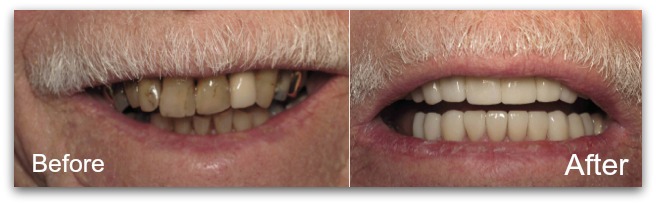
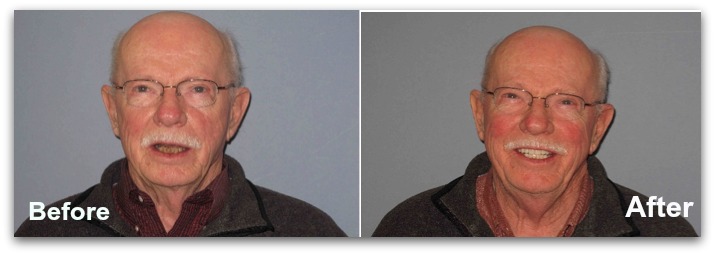
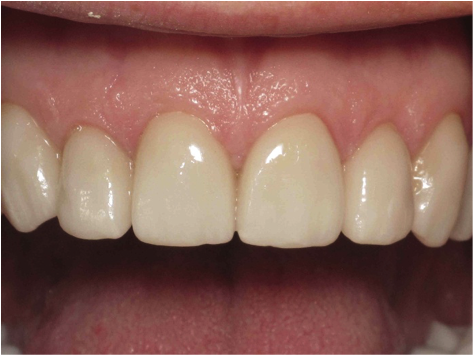
Kathy before

What was recommended?

Initially, Kathy wasn’t looking for a comprehensive plan, and she was able to manage her TMD, so Dr. Elizabeth did the treatment Kathy needed, including replacing a bridge due to decay.  But, over the years, Kathy experienced a number of medical systemic issues, and her TMD got harder for her to manage on her own.  Dr. Elizabeth then talked to Kathy about undergoing the Records Process to better understand the underlying causes of her discomfort and guide her to appropriate treatment.  It took Kathy nearly six years – and several additional crowns and fillings before she felt ready to move forward with this recommendation, but eventually she was ready.

The Records Process is a detailed diagnostic approach that allows Dr. Elizabeth or Dr. Jeff to evaluate not just the teeth, but the entire system.  In Kathy’s case, it really helped both Kathy and Dr. Elizabeth understand that Kathy’s bite was playing a large role in her TMD.

anterior deprogrammer

The first recommendation for Kathy was for her to undergo splint therapy with an Anterior Deprogrammer splint.  This type of appliance is designed to help relax the jaw muscles, reduce strain on the joints, and to help determine the position where Dr. Elizabeth could help create a more stable, comfortable bite for Kathy.  It would be an important step in managing her TMD.

What was involved?

Following five months of splint therapy, Kathy experienced significant improvement in her comfort and jaw function.  With the information Dr. Elizabeth got from splint therapy, she was able to help Kathy understand that the current positions of her teeth were contributing to her TMD.  It would take a lot of dentistry or some dentistry and orthodontics to position Kathy’s teeth into a more stable bite.  Kathy elected to change her teeth and forgo orthodontics so a plan was developed to redesign her whole dentition.

A laboratory wax-up was completed to serve as a precise “blueprint” for Kathy’s future restorations.  This step ensured that both Kathy’s functional goals and aesthetic expectations were carefully aligned.

Over the course of two appointments, nearly all her teeth were meticulously prepared for the placement of custom porcelain crowns and veneers.  These restorations were designed to improve her bite and overall function, but Kathy was also satisfied that they enhanced the appearance of her smile as well.  Kathy didn’t complete all of her treatment at once, and so she initially continued to have some issues with her bite instability and TMD, but as she finished the work on all her teeth, she noticed a vast improvement for her stability and pain.

Kathy After

What does Kathy think?

Patient feedback is an essential part of how we evaluate and continually improve the care we provide.  We asked Kathy to share her perspective – what she thought before beginning treatment, how she feels now that it’s complete, and what she would say to others considering a similar procedure.

Kathy told us that before treatment, she was probably a little skeptical, which is why it took her a while to get started.  But, now that her treatment is complete, she said, “It’s fixed problems I should have addressed a long time ago.  I probably should have done it sooner.  It’s helped relax my jaw, and of course, the teeth look wonderful!”

Her experience reflects the kind of functional and esthetic improvements often seen when underlying bite issues and temporomandibular joint dysfunction are properly diagnosed and treated.

When asked what she would say to someone considering this type of treatment, Kathy added,

“It’s worth it, especially if you’ve had ongoing problems like I did. Just be prepared, it’s a process. You have to have patience and put your trust in Dr. Elizabeth.

Kath After Restorations

Congratulations, Kathy!  Thank you for placing your trust in our team throughout this journey.  At Eggert Family Dentistry, we are committed to helping our patients achieve a lifetime of healthy, confident smiles and yours is a shining example of what’s possible with thoughtful, comprehensive care.

It has been a privilege to guide you through each step of this process, from addressing your temporomandibular joint dysfunction to restoring both your function and esthetics.  We look forward to continuing to care for you and your family for many years to come!

A New Bite, A New Life: How Full Mouth Reconstruction Can Transform Your TMJ and Breathing

By: Dr. Elizabeth Eggert

If you’ve been living with jaw pain, worn teeth, or chronic discomfort, you may not realize how much your bite is affecting your entire body. A full mouth reconstruction—essentially rebuilding and rebalancing all of your teeth—is about far more than just a beautiful smile. At its core, this treatment is designed to bring your teeth, muscles, and jaw joints into harmony. When everything works together the way it should, you can experience less pain, better function, and even improvements in how you breathe and sleep.

When your bite is off, your temporomandibular joints (TMJs) and surrounding muscles are forced to compensate. This imbalance can lead to TMD (temporomandibular disorder), which may show up as jaw pain, headaches, clicking, or even neck and shoulder discomfort. As we’ve noted in previous blog articles, misalignment places excessive pressure on certain teeth and muscles, leading to inflammation and dysfunction. By rebuilding your bite through a full mouth reconstruction, you help redistribute those forces evenly—allowing your jaw muscles to relax and your joints to function the way they were designed to.

What many people don’t realize is that your bite and jaw position can also influence your airway. At Eggert Family Dentistry, advanced diagnostic approaches—including our CBCT technology—help us view the TMJ and the airway like never before. This also helps us better understand how your jaw position impacts breathing, which gives us an inkling as to why you may overwork the jaw muscles like you do. In some cases, adjusting the position of your teeth and jaw through a full mouth reconstruction can help open your airway, encouraging more nasal breathing and better sleep. Dr. Elizabeth Eggert and Dr. Jeff Eggert use a step-by-step approach to find an ideal jaw position for you. They can demonstrate how closely connected your bite, breathing, and overall health truly are.

When you undergo a full mouth reconstruction at Eggert Family Dentistry, you’re not just getting new teeth—you’re getting a comprehensive plan tailored specifically to you. As described on our website, the process begins with detailed records and a thorough evaluation of how your muscles, jaw, and teeth all work together. From there, Dr. Elizabeth Eggert and Dr. Jeff Eggert of North Oaks, MN design a step-by-step treatment plan using restorations like crowns, veneers, or fillings to create a balanced, functional, and esthetic result. The goal is to bring your entire system into harmony so everything “works and looks just right.”

What truly sets this care apart is the life-changing impact it can have. Many patients who complete a full mouth reconstruction report not only a more confident smile, but also significant relief from chronic discomfort and improved day-to-day function. While not every patient needs this level of treatment, Dr. Elizabeth Eggert and Dr. Jeff Eggert have the advanced training to identify when it is appropriate—and the results are transformative. If your bite has been holding you back, this comprehensive approach could help you feel better, sleep better, and live more comfortably than you have in years.

Learn more and schedule your comprehensive evaluation to see if this treatment is right for you. Call Eggert Family Dentistry at 651.482.8412.

Rebuilding My Smile from the Ground Up – Lynn’s Story

By: Dr. Elizabeth Eggert

How did this start?

Lynn started as a patient of the practice with Dr. Jensen in 2000 and transitioned her dental care to Dr. Elizabeth in 2005, when she took over his practice.  During this time, she had five teeth restored with porcelain crowns and continued to require additional restorations over the following years.  In 2018, due to the ongoing restorative needs and the complexity of her case, Dr. Elizabeth recommended that Lynn undergo the “Records Process” to allow for a comprehensive evaluation and to develop a detailed treatment plan for her care.  Lynn also was having many changes and challenges with her medical history, including serious balance, movement, and mobility movement changes.

Lynn Befor

Dr. Elizabeth guided Lynn through the Records Process to evaluate how her bite was currently functioning.  This process included diagnostic models, clinical photographs, and radiographs of Lynn’s teeth, along with a comprehensive muscle and joint evaluation.  These records allowed Dr. Elizabeth to assess and present the current condition of Lynn’s teeth, gums, jaw joints, and the function of her jaw muscles.

Based on the findings, it was recommended that Lynn begin splint therapy using an anterior deprogrammer.  This step was necessary to help relax the jaw muscles and determine a stable, repeatable bite position.  Part of the reason Lynn kept cracking and chipping her teeth was because she didn’t have a stable bite position.  Restoring Lynn’s teeth without first establishing a consistent bite could have compromised the longevity of any work to be done.  Once a stable bite position was identified through the deprogramming process, adjustments to her bite were planned with restorations to achieve the best long-term stability.

Deprogammer and aligner 2026

What was recommended?

As mentioned, Lynn started her splint therapy with an anterior deprogrammer, which should have helped her muscles relax into a more repeatable bite.  However, one of the most important things to understand about splint therapy is that it does NOT always improve the condition (at least right away), but no matter if the condition stays the same, gets better, or gets worse, we learn something from this diagnostic process.

Lynn had a fairly difficult time adjusting to the anterior deprogrammer and found that her sleep was affected.  She also had many other red flags for poor sleep quality, including the medical changes she was experiencing.  Lynn elected to have a formal sleep test done and she was diagnosed with moderate sleep apnea, as well as having many arousal events each night.  Lynn and Dr. Elizabeth changed Lynn’s splint therapy to the sleep-based Seattle Protocol and they learned that Lynn’s sleep, pain, and bite improved when her lower jaw was in a forward position.  This helped Lynn and Dr. Elizabeth learn that Lynn’s teeth and tongue craved more room to function better.  Lynn elected to undergo Invisalign treatment with Dr. Elizabeth.  The goals for her treatment were to expand the room in her oral cavity and then restore her teeth to match this improved location for her bite.

Invisalign is a clear aligner orthodontic system and is used to gradually move teeth into their ideal positions.  Invisalign uses a series of custom-made, removable aligners that apply gentle, controlled forces to shift the teeth over time.  In Lynn’s case, Invisalign was used to properly align her teeth and create the correct spacing and positioning needed before completing her final restorative work. Establishing proper tooth alignment helped ensure a more stable bite and allowed for more predictable, long-lasting restorative results.

What did she want?

Lynn wanted her teeth to look better, but she also wanted things to feel better.  She wanted improved sleep, she wanted her teeth to last.  She didn’t want to have to always be thinking about them – whether they would break or crack on her.  Lynn expressed that she did not want “glowing white” teeth, but she did want her smile to appear noticeably whiter and more natural.  Her goal was to achieve teeth that looked healthy, felt both functional, and beautiful.  She wanted her new teeth done as quickly as possible, but she understood the benefits of the orthodontic treatment, which did take more time to undergo.

What was involved?

In just over a year, Lynn completed her Invisalign treatment.  She was even able to continue her care during her winters in sunny Florida!  Invisalign was very successful in expanding for more room for Lynn, but we knew that without restorations throughout her mouth, it would still be difficult to manage her bite long-term.  Invisalign helped with improving her muscle stability, but her bite still was not always able to find a repeatable position due to the shapes of her original teeth.

Lynn Invisalign 2026

A laboratory wax-up was done to create a blueprint of Lynn’s future restorations.  Then, over the course of two days, nearly all her teeth were carefully prepared in preparation for the placement of porcelain crowns and veneers.  These restorations would improve Lynn’s bite, function, and overall smile.

What does Lynn think?

Lynn told us that before undergoing this process with Dr. Elizabeth she was unsure what she even wanted or could ask for.  “It was all unknowns.”  Lynn was excited to have everything done though, especially because of the prospect of how it could improve her breathing and her health and because her husband had undergone some cosmetic tooth work himself.

After all that was involved, Lynn told us that she is very pleased with everything, even though she ran into medical complications and COVID along the way, in the end she notes, “It was effortless.  It was surprisingly easy.”

She told us that if she was talking to someone thinking about undergoing a full mouth dental reconstruction, she would tell them “It’s worth it!  It’s a long process, but it’s worth it and you’ll feel so much better in the end!”

Congratulations, Lynn!  Thank you for putting your trust in us.  At Eggert Family Dentistry, we truly believe in helping our patients achieve a lifetime of smiles and yours is a shining example.  We were delighted to guide you through this journey and look forward to caring for you and your family for many years to come.

Lynn After

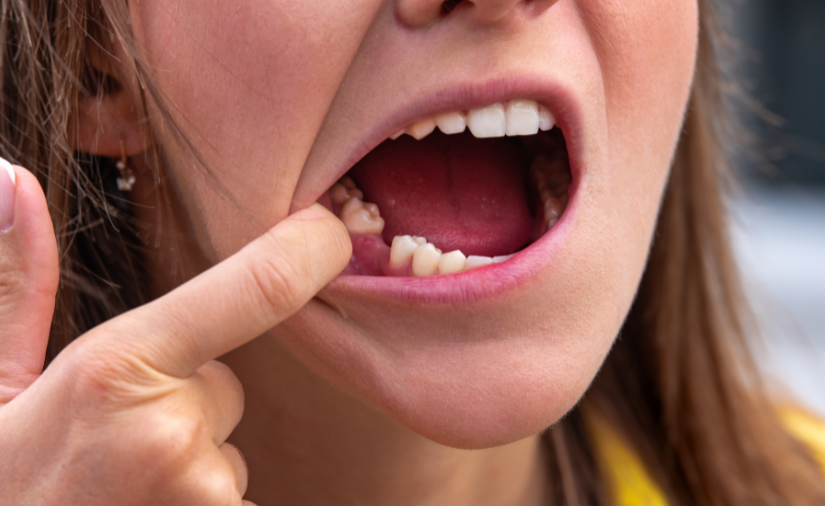
Understanding Tooth Loss: Common Risk Factors and How to Protect Your Smile

By: Dr. Elizabeth Eggert

No one wants to lose their teeth. Unfortunately, many people lose at least one adult tooth in a lifetime for a variety of reasons. But, seeing as it can impact both oral health and quality of life, it is helpful to understand the factors that contribute to tooth loss in order to adopt proactive strategies that help you maintain a healthy smile for years to come.

Let’s explore the common risk factors associated with tooth loss, as well as some practical tips on preventing tooth loss. We’ll also take a look at the various treatment options available at Eggert Family Dentistry to restore and replace missing teeth.

What Is Tooth Loss?

Tooth loss refers to the condition in which a person loses one or more of their natural teeth. Tooth loss can have significant effects on a person’s oral health, as well as their ability to bite, chew, and speak properly. It can also impact one’s self-esteem and overall quality of life. Treating and preventing tooth loss is important not only for maintaining a healthy smile, but also for preserving oral function and overall well-being.

Common Causes and Risk Factors of Tooth Loss

  • Gum Disease: Gum disease, also known as periodontal disease, is a common risk factor for tooth loss. When plaque and tartar build up along the gum line, bacteria can infect the gums, leading to inflammation and loss of the supporting bony structures for the teeth, eventually causing tooth loss if left untreated.
  • Cavities (Tooth Decay): Untreated tooth decay can result in cavities, which, when left untreated, can progress and reach the inner layers of the tooth. Severe tooth decay can cause tooth infection or abscess, leading to tooth loss.
  • Teeth Grinding: The habit of grinding or clenching teeth, known as bruxism, can exert excessive pressure on the teeth, leading to enamel wear, fractures, and tooth loss over time.
  • Injury or Trauma: Accidents, sports injuries, or other forms of trauma to the mouth can cause immediate tooth loss, or damage that may eventually lead to tooth loss if not promptly treated.
  • Dry Mouth: Saliva plays an important role in neutralizing acids, remineralizing teeth, and washing away bacteria. Not having enough saliva in the mouth increases the risk of tooth decay and gum disease, which can ultimately lead to tooth loss.
  • Diabetes: Poor blood sugar caused by uncontrolled diabetes weakens the immune system. A weak immune system will find it harder to fight off infections of the gums, accelerating gum disease and potentially leading to tooth loss.
  • Smoking: Tobacco use significantly increases the risk of gum disease by reducing blood flow to the gums, making smokers more susceptible to tooth loss.

How to Prevent Tooth Loss

Hygiene Habits

Make sure you brush and floss and floss your teeth regularly. That means brushing at least twice a day and flossing at least once a day. Additionally, make sure you’re maintaining a regular schedule of dental appointments with Eggert Family Dentistry so Dr. Jeff Eggert and Dr. Elizabeth Eggert can monitor your oral health.

Lifestyle Choices

It should come as no surprise that you need to avoid tobacco consumption in all forms if you want to have a healthy mouth. Other lifestyle changes might include wearing a night guard for bruxism, consuming fewer sugary/acidic foods and drinks, and talking to your medical doctor about treatments for diabetes or high blood pressure to make sure your overall health is being taken care of.

Protective Measures for Sports

If you or a loved one engage in any kind of contact sports, mouth guards are a must. A properly fitted mouthguard can protect your teeth from trauma and prevent tooth loss if an accident happens. Additionally, if your sport allows it, wear a helmet! [DO WE HAVE A PREVIOUS MOUTHGUARD BLOG YOU COULD LINK HERE?]

Treating Tooth Loss

Thanks to modern dentistry, tooth loss doesn’t have to be permanent! At Eggert Family Dentistry, we can recreate the look and feel of your natural teeth using implants or dentures.

Implants are anchored in the bone and they help preserve bone mass in the jaw. Once they are established, you can care for them just as you would your normal teeth, with brushing and flossing. The feel of chewing and speaking will all feel completely familiar. Implants are built to last a lifetime, and they almost always do.

Bridges use the neighboring teeth as anchors to fill in a “tooth” where the natural tooth is missing. Bridges can be a good option if the neighboring teeth also need reconstruction or if the bone isn’t healthy enough for an implant.

Dentures or Partial Dentures are another solution and can be less expensive than implants, however, they may need to be replaced multiple times in a lifetime as the shape of the jaw, mouth and adjacent teeth change over time.

Suffering from Tooth Loss?

If you’re experiencing tooth loss, booking an appointment with Eggert Family Dentistry can be the first step towards restoring your smile. With our compassionate care and expertise, Dr. Jeff Eggert or Dr. Elizabeth Eggert will evaluate your oral health and determine the best treatment options for you. Whether it’s dental implants, bridges, dentures, or other restorative solutions, we can tailor a treatment plan to meet your unique needs. Give us a call today at (651) 482-8412!

Full Mouth Reconstruction: The Importance of Treatment Planning

By: Dr. Elizabeth Eggert

Whether you’re dealing with extensive tooth loss from injury or aging or severe tooth decay, if you have an array of dental issues that have been causing you problems, you may be a candidate for a full mouth reconstruction. 

A full mouth reconstruction is a comprehensive dental treatment that involves restoring or replacing all of the teeth in a patient’s mouth. This process usually includes a combination of restorative, cosmetic, and orthodontic or surgical procedures to address a variety of dental problems, such as missing teeth, tooth decay, gum disease, and bite issues. 

As with all complex processes, it’s imperative to plan your course of action ahead of time if you want the best outcome. For a full mouth reconstruction, Eggert Family Dentistry provides quality treatment planning which involves careful assessments, diagnosis, and treatment. 

Let’s take a look at the importance of treatment planning for a full mouth reconstruction:

1. Getting an Accurate Diagnosis and Assessment

Treatment planning for a full mouth reconstruction starts with a comprehensive dental examination as part of our Records Process. The Records Process includes gathering x-rays, photographs, and impressions of the teeth and gums. The examination will allow Dr. Jeff Eggert and Dr. Elizabeth Eggert to take note of any bite issues, jaw problems, or esthetic concerns. With this information, we can then make an accurate diagnosis that will help us develop a treatment plan that meets your specific needs and goals.

2. Creating a Customized Treatment Plan That Meets Your Unique Needs

Because every patient’s dental needs and goals are unique, there’s no one-size-fits-all approach to a treatment plan for a full mouth reconstruction. A customized treatment plan will be developed based on your dental assessments and preferences. 

At this stage, Dr. Jeff Eggert or Dr. Elizabeth Eggert will provide a detailed explanation of why we recommend a certain course of treatment and what it involves. This plan will outline the recommended procedures and expected timeline for completion. We will review the entire treatment plan with you, including follow-up visits, and provide you with instructions to support your treatment plan at home. During this stage, we may also create a dental mock-up, or a 3-D model of your smile that will show you the expected outcome of your treatment.

3. Taking A Comprehensive Approach to Treatment

A full mouth reconstruction typically involves multiple dental procedures, such as dental implantscrowns, bridges, and veneers. Oftentimes, ways to improve the bite, like splint therapy or orthodontics may also be indicated. Dr. Jeff Eggert or Dr. Elizabeth Eggert will work to improve the overall look of your smile. The entire treatment will likely take multiple office visits. 

4. Minimizing Treatment Time and Cost

Treatment planning for a full mouth reconstruction is essential for minimizing treatment time and cost. By carefully outlining the procedures and optimizing their outcomes, we can reduce the number of visits needed and the duration of the treatment. Additionally, a detailed treatment plan will help you understand the cost of each procedure and plan accordingly, avoiding unexpected expenses.

5. Creating a Better Patient Experience

Treatment planning for a full mouth reconstruction is critical for ensuring a better patient experience. A comprehensive approach that addresses prior dental issues and meets all your goals will help minimize pain, discomfort, and anxiety during the treatment. Additionally, a detailed treatment plan will help you understand the process, prepare for the procedures, and have realistic expectations about the outcome.

Let the Experts at Eggert Family Dentistry Plan Your Treatment

At Eggert Family Dentistry, we understand that quality treatment planning is crucial for a successful full mouth reconstruction. If you’re considering a full mouth reconstruction, it’s essential to work with a qualified and experienced dentist who can develop a detailed treatment plan and guide you through the process. If you’re interested in talking to Dr. Jeff Eggert or Dr. Elizabeth Eggert about a full mouth reconstruction, contact us today or give us a call at 651.482.8412. We look forward to creating a plan to achieve your healthiest, most beautiful smile! 

List Join

Advantages of the All-on-4® Treatment

By: Dr. Elizabeth Eggert

When our patients have many teeth that have been extracted or are severely jeopardized, Dr. Elizabeth and Dr. Jeff have an advanced, convenient and very natural solution to offer. It’s called All-on-4® treatment and it’s a simple, streamlined way to restore a full arch of teeth.

What do we mean by a full arch of teeth? This refers to a full set of teeth on the upper and/or lower jaw. Full dentures have traditionally been the solution for replacing all teeth of an arch, but advances in implants have enabled improved technology such as the All-on-4® technique.

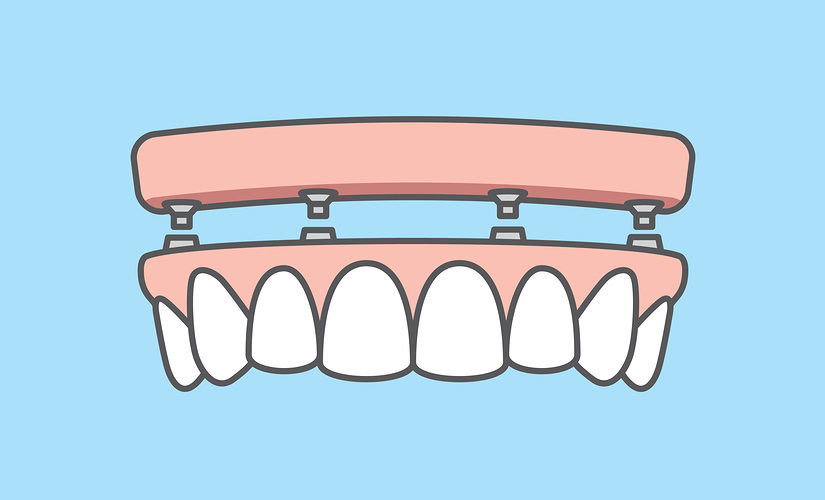
All-on-4® treatment is kind of like a hybrid between implants and dentures. Instead of replacing each tooth individually by sinking an implant, we place four (possibly more) implants. These implants serve as the anchor for a single restoration unit which is basically a series of replacement teeth all attached in a row, like dentures.

This way, you get the best of both worlds. The simplicity of installing a series of consecutive teeth at once, like a denture, is combined with the convenient permanence of implants, not to mention rock-solid anchorage like you have from your natural teeth.

This means that you don’t have to worry about your restoration falling out or slipping, as can happen with dentures. Your restored mouth will function just like it was born to do. You can eat anything you like, and you simply brush, floss and clean your teeth as you would your natural teeth (although adding a Waterpik can be helpful).

Temporary Provisional Teeth

With this type of implant technique, we can usually install a temporary set of provisional teeth on the implants on the same day they are installed. This means you will leave our oral surgeon’s office with a smile you can be proud of right away. After the jaw bone integrates to the implants securely, we’ll swap out the temporary set for an even stronger and more life-like final set and you can expect decades of low-maintenance service from your restoration.

Why Choose the All-on-4® Treatment?

The All-on-4® technique has a lot of benefits. In addition to what we mentioned above, consider these factors:

  • Fewer implants are required when anchoring the All-on-4®. This means less time in the dental chair, less discomfort, and lower costs.
  • The four implants referred to in the name of the procedure refer to two implants secured perpendicularly to the jawbone and two implants secured at a 45-degree angle. Being placed at an angle gives these second two implants greater traction, so bone grafts are not typically necessary.
  • Loss of teeth and the accompanying reduction of jawbone stimulation can cause bone loss. That’s why some denture wearers have a sunken appearance to their cheeks. However, dental implants stimulate bone growth which helps preserve the integrity of your jaw bone for a more youthful appearance.

The All-on-4® dental implant technique is a long-term solution that will improve your smile and your oral function for many years to come.

If you’ve been dreading getting multiple implants, maybe an All-on-4® is the solution for you! Talk to Dr. Jeff or Dr. Elizabeth about your priorities in terms of dental reconstruction. We’ll be happy to talk through all your options to ensure that you choose the treatment that best suits your needs. Call us today at 651.482.8412 to schedule your next appointment.

List Join

A Full Mouth Reconstruction – Mike’s Story

By: Dr. Elizabeth Eggert

How Did this Start?

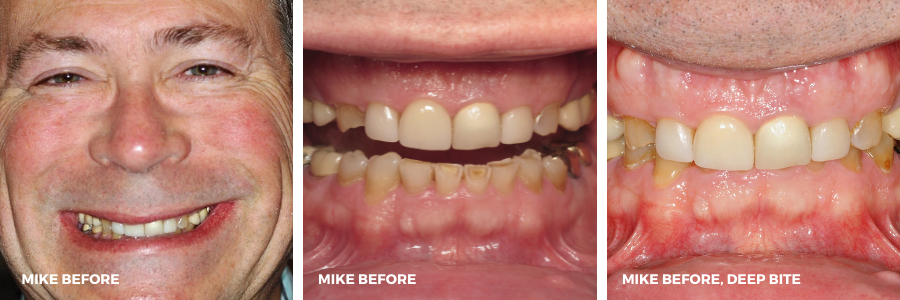
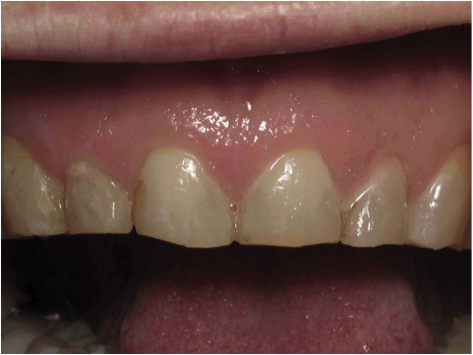
Mike had been a long-term patient of Dr. Furey when Dr. Elizabeth took over his care in 2016. Up to that point, Mike had talked with Dr. Furey about the need to restore his mouth due to the severe erosion that was occurring throughout. Starting in 2016, his canines were starting to decay in addition to the erosion weakening the tooth structure. Mike was also starting to have pain on a lower left tooth due to an infection in his tooth. Mike’s case had a lot involved because we were not only dealing with erosion, but his bite and jaw anatomy have likely been contributing to the erosion on his teeth. This meant that the most predictable way to restore him back to health would involve jaw surgery and restoring all his teeth.

Mike had long been functioning with a deep bite meaning that his tongue and airway were working with space restrictions. It is thought that oftentimes deep bites will increase acid production in the mouth and be a source for erosion. Mike had previously been diagnosed with sleep apnea and had been using a CPAP machine for many years. Sleep apnea is often caused, at least in part, by a restricted airway.

What Did Mike Want?

Mike stated his goals for his teeth were “that they work and I don’t lose them.” He was noticing jagged edges and that his upper canines were especially worn. He thought the wear was due to the fact that he caught himself grinding his teeth during the day and night. He didn’t realize that the erosion may be part of a larger whole health issue. Mike had many options to consider and while he understood that jaw surgery may be the best way to improve his overall airway, in the end he decided against surgery. This meant that Mike needed to open up his deep bite and complete restorations on all of his teeth.

What Was Involved?

In order to open up Mike’s bite, a laboratory wax-up was completed. This helped create a “blueprint” of how the teeth would look with the new restorations. After Mike approved the wax-up, he started by getting his infected tooth extracted. This allowed some time for healing before an implant was placed in that same area. Mike’s progress was slowed up somewhat due to complications he had with his heart and having to undergo surgery, as well as the COVID shut-down, however, after 4 years, Mike was finally on his way to protecting his teeth with new restorations.

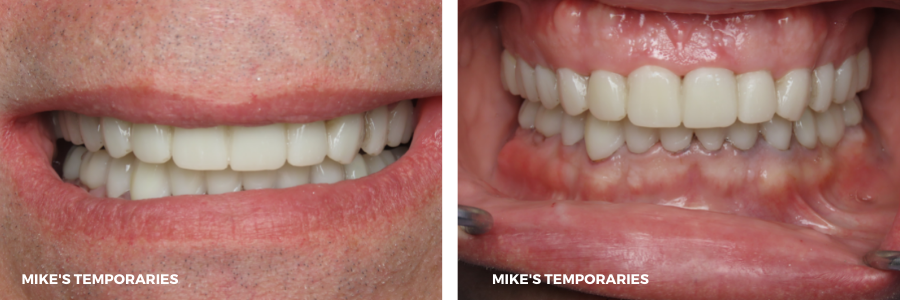
All of his teeth were worked on and prepared for crowns or veneers. Mike underwent preparations of the upper teeth one day and of the lower teeth another day. He spent time in temporary crowns and had to start getting used to his new bite. At first, he said “it feels kind of like a mouth full of marbles.” But, then as his muscle adjusted, he thought his bite felt good.

What Does Mike Think?

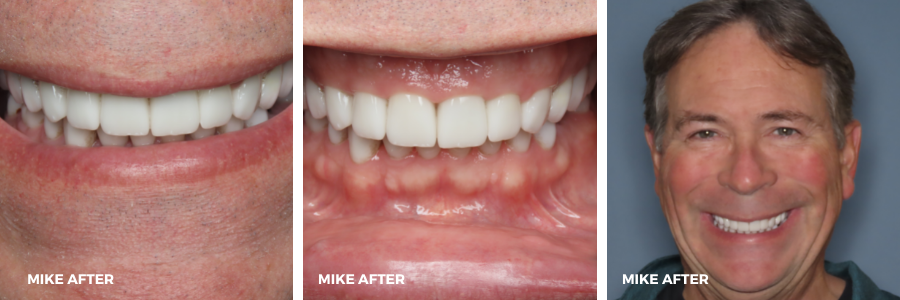
Before he started his treatment Mike stated he was “apprehensive about it.” The work in general made him apprehensive. It was a big decision, but he understood that his teeth were at severe risk if nothing was done. He did not want to “lose all those teeth.” Mike reports now he is “very happy with the results and I like them a lot!” He likes having the smooth surfaces of his new crowns rather than the rough, sharp edges from the erosive wear pattern on his natural teeth. He admits that he wishes he would have done the work sooner and that it hadn’t taken him so long to make a decision. If talking to someone considering getting this type of treatment done, he would tell them to “do it sooner than later. Be patient and follow the recommendations given by Dr. Elizabeth.”

Mike’s final results are an improvement in that he doesn’t have such a deep and restricted bite and the enamel that was eroded away has been replaced by strong porcelain. Unfortunately, without undergoing jaw surgery, Mike’s teeth will still be at risk due to jaw movements Mike makes to keep his airway more patent. Mike will still have to maintain his treatments for sleep apnea and he will likely still have dental work to do in the future should his teeth break down the road. Mike’s case is a good example of why we like to take time with kids and teenagers, making sure they are developing adequate room in the mouth for a good airway and skeletal structures, trying to prevent compromise before it occurs!

Full Mouth Reconstruction, Explained

FULL MOUTH RECONSTRUCTION, EXPLAINED

At Eggert Family Dentistry, our comprehensive approach means that we focus on your overall oral health. Instead of regarding your teeth in isolation, we take a holistic and comprehensive perspective on how your mouth functions as a whole, and how it functions in relation to your whole body.  

In some cases, patients exhibit a constellation of issues that are best resolved by a full mouth reconstruction. This typically is caused by trauma to the jaw or teeth, significant decay, long-term erosion from acid or tooth grinding, or long-term structural issues such as a misaligned bite. 

In these cases, restoring and rebuilding all of the teeth in both the upper and lower jaws may be the best strategy. 

A full mouth reconstruction is likely to involve a number of phases and specialties, including:

  • General or restorative dental procedures such as crowns, bridges, and veneers with Dr. Jeff or Dr. Elizabeth
  • Periodontal attention to the gums
  • Oral surgery
  • Orthodontics to address tooth movements and positions

What to Expect When Considering a Full Mouth Reconstruction

When you are considering a full mouth reconstruction, here’s what you can expect at Eggert Family dentistry. 

We’ll start by doing a detailed evaluation of your muscles, jaws and teeth, and their relationships with each other. We’ll talk about all health considerations relating to your mouth, including information about sleep and airway, and we’ll ask you about your esthetic goals. Next, Dr. Elizabeth or Dr. Jeff will take you on a tour of your mouth, explaining different treatment options. They’ll explain everything carefully and answer questions so you can make excellent decisions, and together we’ll come up with a treatment plan.

These are the kinds of procedures that are often part of a full mouth reconstruction:

  • Initial deep cleaning of your teeth and gums. 
  • Ensuring a stable bite so your restored teeth will not suffer undue wear. This might require orthodontics or a bite reprogramming orthotic/splint. Your occlusion, or how your teeth contact, must be addressed before we perform additional restorative procedures.
  • Tooth restorations, which can include porcelain veneers, crowns, inlays or onlays, bridges, and implants.

A Big Commitment with Big Rewards

A full mouth reconstruction is an ambitious endeavor with huge rewards. Many patients feel transformed when treatment concludes and they have an attractive smile and a healthy mouth, free of pain or discomfort. In many cases, even severe TMJ (temporomandibular joint disorder or TMD) pain can be relieved by the comprehensive approach and comprehensive reconstruction. 

This treatment is a long-term project, involving multiple visits, but Dr. Elizabeth and Dr. Jeff are happy to walk you through every aspect of your treatment plan, so you have a very clear idea of the timeline and what to expect. 

If you are experiencing ongoing pain or discomfort in your mouth or jaw, or if you want a new improved smile which you’re excited to share with people, or if your teeth are broken down and need to be rebuilt, please contact Dr. Jeff or Dr. Elizabeth at Eggert Family Dentistry, 651-482-8412. We love to help people experience the transformation in oral health and confidence that can accompany a full mouth reconstruction.

Full Mouth Reconstruction – Am I a Candidate?

By: Dr. Elizabeth Eggert

There are times when, even with diligent touch-up work throughout the years, a person could truly benefit from full mouth reconstruction. This reconstruction process involves restoring all the teeth in both the upper and lower jaw and oftentimes correcting the bite and healing the gums. At Eggert Family Dentistry, when we undertake full mouth reconstruction, we work closely with periodontists, oral surgeons, orthodontists and endodontists as needed to achieve optimal results for our patients.

Who is a candidate?

If you’ve experienced tooth loss, decay or trauma to your teeth, have teeth that are worn down from years of acid erosion or teeth grinding, jaw, muscle or head pain that stems from improper positioning of the jaw and ultimately want to improve the aesthetic of your teeth and regain your confident smile, you may be a candidate for full mouth reconstruction.

Some of the procedures involved

Each patient is different and maintains a unique set of dental challenges. On this account, each treatment plan is unique as well. However, all of our patients maintain one common goal: to achieve a healthy, comfortable and attractive smile.

At Eggert Family Dentistry, we start by thoroughly evaluating your specific dental situation. We inspect teeth, gums, muscles and the jaw. We do this through the use of impressions, photos and x-rays. Is your bite even or is it uneven and uncomfortable, causing wear and deterioration of your teeth? Which teeth are cracked, worn or in need of repair? Do you have any missing teeth? How about your gum health – is there any sign of periodontal disease?

Dr. Eggert then puts together a comprehensive “tour” of your mouth and walks you through different treatment options. If a full reconstruction is warranted, treatment may include procedures such as veneers, crowns, fillings, inlays, onlays, scaling and root planing, orthodontic attention for bite correction…the list goes on.

If you decide to proceed with a full reconstruction, Dr. Eggert will refer you to any specialists that will be involved in your case, confer with them on their findings and create a step-by-step treatment plan to correct all dental issues and accomplish your reconstruction.

The results

This process can take 12 months or more as it requires a series of appointments – often with a handful of dental professionals – but the results of full mouth reconstruction cannot be underestimated! Your investment in dental wellness will vastly improve your oral health and boost your self-confidence. You really can be comfortable in your own skin and have a smile you want to share!

Richard, one of our patients at Eggert Family Dentistry, is a testimony to the power of a reconstructed smile! Read his story here.

If you’re intrigued by the idea of full mouth reconstruction and think you may be a candidate, we would be happy to sit down with you and discuss your individual needs. We can be reached at 651.482.8412.

Hudson’s Composite Bonding Success Story: Congenitally Missing Teeth

By: Dr. Elizabeth Eggert

A wisdom tooth that never grew in is a good thing—one less tooth to remove! However, being a child with a missing front tooth is quite a different story. Teenage years are often difficult enough without having to worry about appearance. With the emotional roller coaster of being a teen, we need to give our children any excuse to smile!

A congenitally missing tooth is one of the most common dental developmental abnormalities. In fact, roughly 20 percent of adults have at least one tooth that never developed.

Why is that number so high? Well, we’ve all heard of that person who didn’t develop all, if any, wisdom teeth. If you take wisdom teeth out of the picture, the percentage of adults with congenitally missing teeth drops to only 5 percent. Other permanent teeth we see missing are second premolars, upper lateral incisors, and lower central incisors.

Hudson’s Success Story

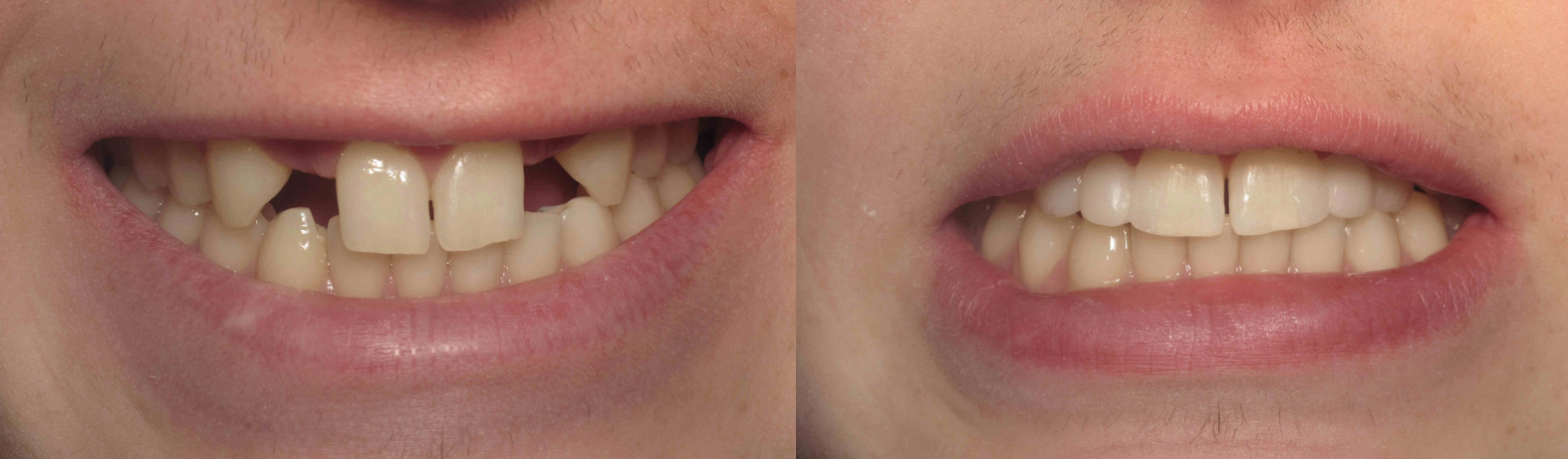
Hudson Before
Hudson’s Smile Before

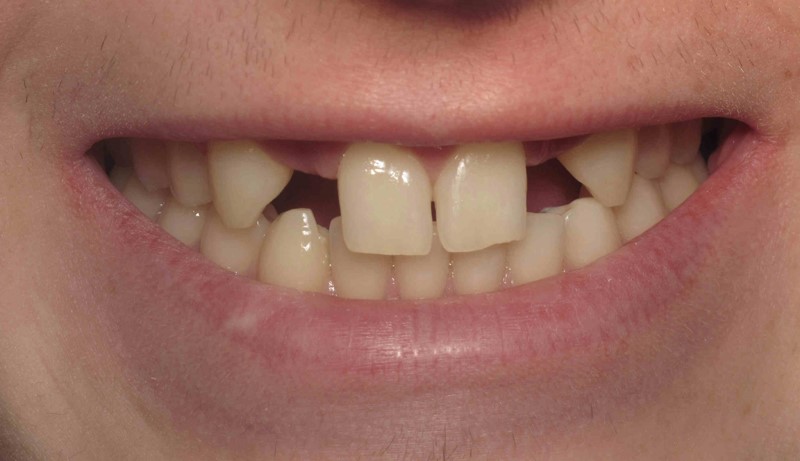
Hudson is a 17-year-old patient of ours who never developed his upper lateral incisors. Typically, implants are the treatment of choice to replace missing teeth like this. The golden rule for teenagers is to proceed with implant placement once skeletal growth is complete. Early implant placement, at a time of continuing growth, can lead to unaesthetic final results.

Hudson wore traditional braces to improve and even out the spacing to allow room for implants once skeletal growth is complete. But, what could be done now for Hudson?

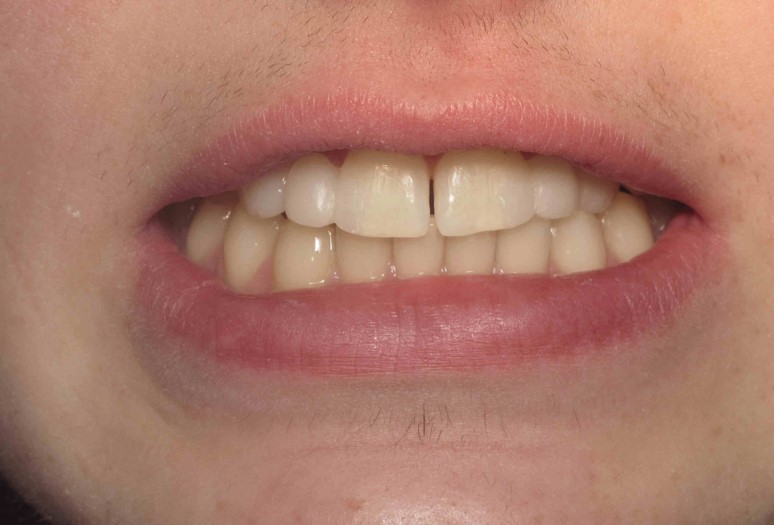
Dr. Elizabeth recommended composite bonding, which should last many years and give Hudson a fixed option to replace the missing teeth and keep his teeth from shifting. To even out Hudson’s symmetry, resin composite bonding material was added to his six front teeth to create a natural-looking smile that he can confidently wear until it’s time for implants. Hudson loves his new smile!

Hudson After
Hudson’s Smile After

Don’t let missing teeth affect your confidence. Contact us today to discuss treatment options.

Hudson Before and After
Hudson’s Smile Before and After