New Crowns and Veneers – Not Scary at All! – Joy’s Story

By: Dr. Elizabeth Eggert

How did this start?

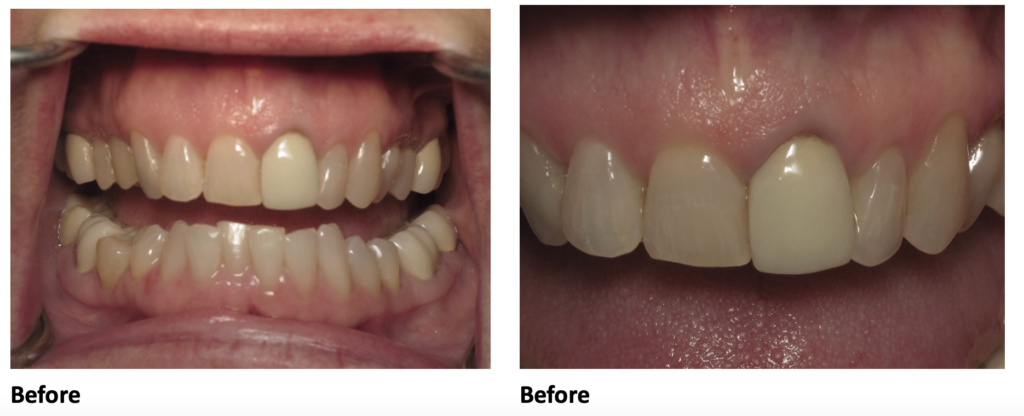
Eggert Family Dentistry is celebrating 20 years this October!  Joy has been there with Dr. Elizabeth the whole time!  In 1993, Joy fell and experienced trauma to her front teeth.  She had root canals and crowns done at that time, but was starting to notice a crack in the porcelain of one of the crowns and she didn’t like the staining that showed.  She also wondered about better color matching for all her front teeth since at that time, only 2 teeth had crowns.  For a few years, she asked Dr. Elizabeth what could be done, but was always nervous to move forward with treatment because she couldn’t decide if she was willing to accept her currently darker coloring or if she wanted something brighter and younger looking for her smile.  She also now has Parkinson’s disease and notices that caring for her teeth is getting more difficult, as well as sitting through dental treatment, so she didn’t want to keep putting off the decision.   

Before

Before

What was recommended?

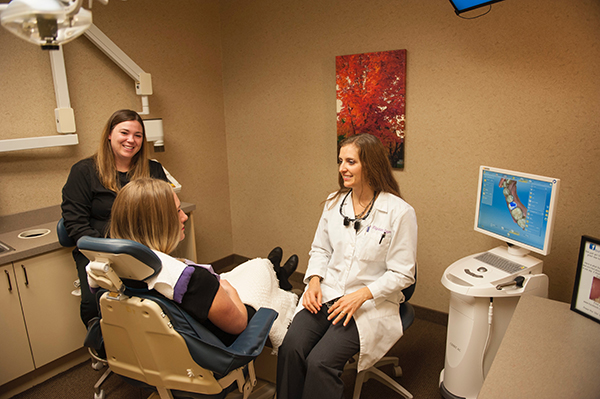
Dr. Elizabeth verified the recommended treatment using photographs and 3D models of Joy’s teeth.  Joy wanted to improve the color of her teeth, making everything brighter.  Therefore, it was recommended to do porcelain restorations for all 4 of her upper front teeth.  That way, the old crowns could be replaced and the other front teeth could also be better protected where wear and cracking was starting.  Since Joy also wanted brighter teeth throughout her mouth, it was recommended that she start with bleaching so the rest of the teeth could be brighter too!

What was involved?

Joy wondered about her lower teeth and if anything could be done for the crowding, but she didn’t want to undergo Invisalign so she decided to just move ahead with the bleaching and upper restorations.  Dr. Elizabeth worked up Joy’s case by mocking up a proposal on Joy’s models, looking at how the crowding in the lower teeth contributed to the slight length discrepancy of her front teeth.

Dr. Elizabeth suggested making the front teeth the same length which would also require adjusting on Joy’s lower teeth.  Joy thought this was a better idea for her than Invisalign, so they moved ahead with the plan.

Joy started with Zoom whitening, which really helped her teeth brighten up multiple shades and allowed Joy to have all her teeth brightened, while minimizing the number of restorations.

Before and After Zoom

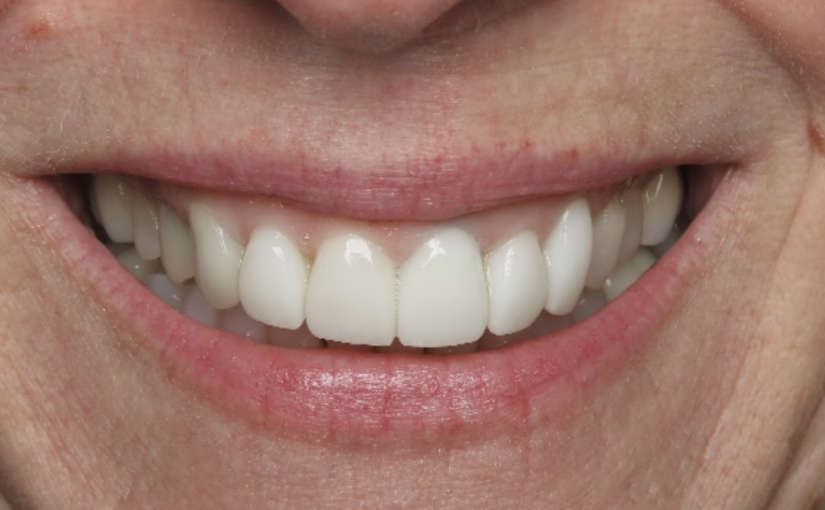
Joy underwent the preparation appointment.  Dr. Elizabeth noticed that Joy’s previously traumatized teeth were especially dark from the trauma.  She worked to mask the color difference as much as possible, but informed Joy that perfect color matching might not be possible.  Joy accepted that since she really wanted to keep her teeth, rather than extract them and replace with implants.  So, after a couple of weeks, Dr. Elizabeth inserted Joy’s porcelain restorations – 2 veneers and 2 crowns.

What does Joy think?

After the procedures were completed we met with Joy to reevaluate her restorations and see how she was feeling about the treatment.  She reported that everything was been feeling great and that her bite felt good.  We asked Joy what she thought about getting the procedures done.  She noted, “It was kind of scary.  I knew a lot would be involved so I was scared.”  In the end, Joy said the process was better than she thought it would be – actually, not scary at all!  Joy told us, “I am so happy with it.  I was looking a little dull so this brightens my smile, but it’s not over the top – it’s just enough!  It’s better!”  When we asked her what she would tell a friend or relative who was considering the same treatment, she said “It’s worth the investment!”

You look fabulous Joy and we appreciate your trust in us for over 20 years!  We look forward to continuing to bring you “Dentistry for a Lifetime of Smiles!”

Can You Get Decay Under a Dental Crown?

By: Dr. Elizabeth Eggert

When you invest in a dental crown, you expect it to last for many years. Crowns are designed to restore both the look and function of your tooth, but did you know it’s still possible to get decay under a crown? Even though a crown itself cannot decay, the natural tooth structure underneath it is still vulnerable. If decay develops under the crown, it can compromise the health of your tooth and eventually require crown replacement.

Decay under a crown often happens when bacteria find their way to the margin where the crown meets your natural tooth. If you don’t brush and floss regularly, plaque can build up along this edge and cause cavities just like it would on any other tooth. Excessive force from habits like grinding or clenching your teeth can also cause tiny openings or fractures in the crown or cause a breakdown in the marginal seal, creating space for bacteria to sneak in. Over time, these issues can lead to decay hidden beneath the crown.

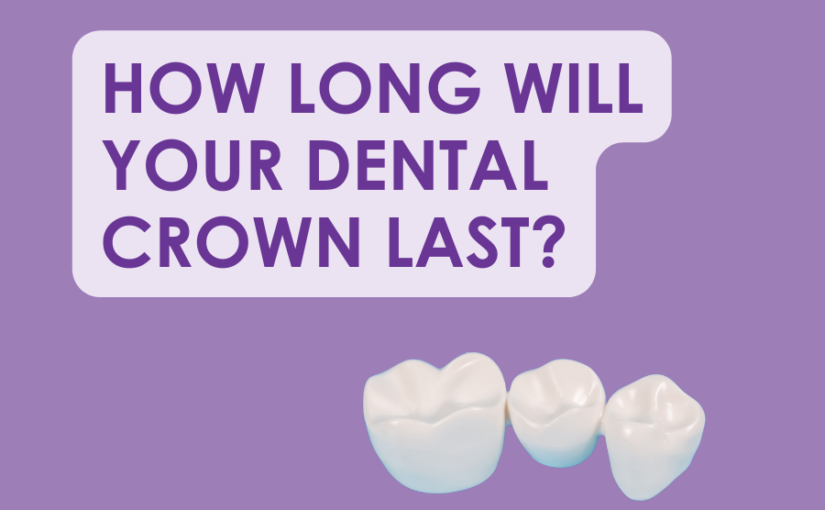
On average, statistics suggest that dental crowns last between 10 and 15 years, although with excellent care, many can last even longer. The exact lifespan depends on a variety of factors including your oral hygiene, dietary habits, bite force, and how well the crown was initially placed. Even the best crowns are not indestructible, and wear and tear over time is normal. Think of all the chewing cycles your teeth go through every year, like tires on your car, they are not immune to wearing out or breaking down.

The best way to extend the life of your crown is to take care of it just like you would your natural teeth. Daily brushing and flossing are essential, especially around the gumline where bacteria like to gather. Using a night guard if you grind your teeth can protect your crowns from unnecessary force. Regular dental check-ups and cleanings are equally important because they give your dentists at Eggert Family Dentistry in North Oaks, MN a chance to detect early signs of wear or decay before problems become serious.

Dr. Elizabeth Eggert and Dr. Jeff Eggert are committed to helping you maintain your crowns for as long as possible. During your recare exams, we carefully evaluate your crowns to make sure they are functioning properly and to look for any signs of decay. If a crown does need to be replaced, we work with you to ensure the process is smooth and your smile stays healthy and strong. By partnering with us and staying proactive about your dental care, you can enjoy the longest possible lifespan from your crowns.

Is it time for your recare exam or do you need to establish care with a caring dental office? Don’t delay! Call us at 651-482-8412 for an appointment today!

The Role of Dental Crowns in Dentistry

By: Dr. Elizabeth Eggert

Believe it or not, dental crowns have been around since ancient times. Thought to have originated in Italy in the 700s BC, these first crowns were made of gold and communicated status among the aristocratic population. Fast forward two millennia to 1903, when Dr. Charles Land developed the first crown with hints of porcelain material as a way to repair a broken tooth.

Today, the role of crowns is two-fold. Crowns are both structural and aesthetic. Let’s take a closer look!

What Are Dental Crowns?

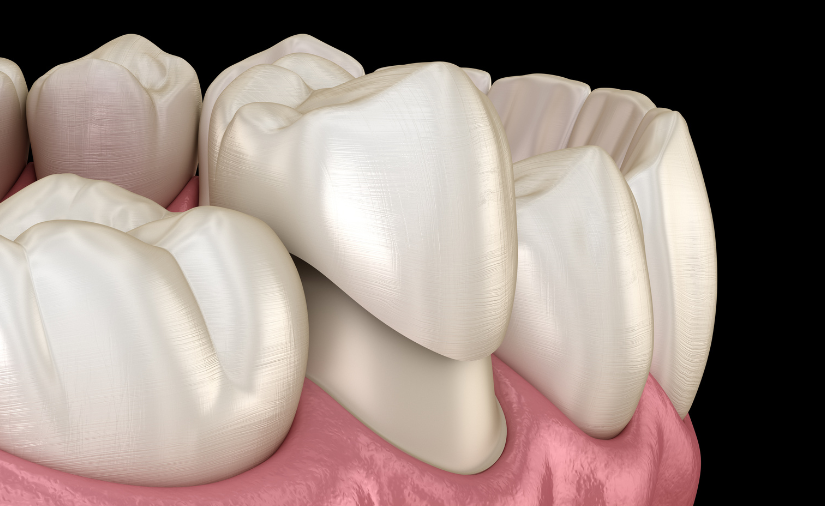
If you’ve heard people talk about crowns but you’re not entirely sure what they are, think of a crown like a hat or helmet for your tooth. This “helmet” fits snugly over your natural tooth, protecting it from splitting or breaking. Then it’s bonded into place. Before placing a crown, Dr. Elizabeth Eggert or Dr. Jeff Eggert removes a small amount of enamel from your tooth to ensure a proper fit.

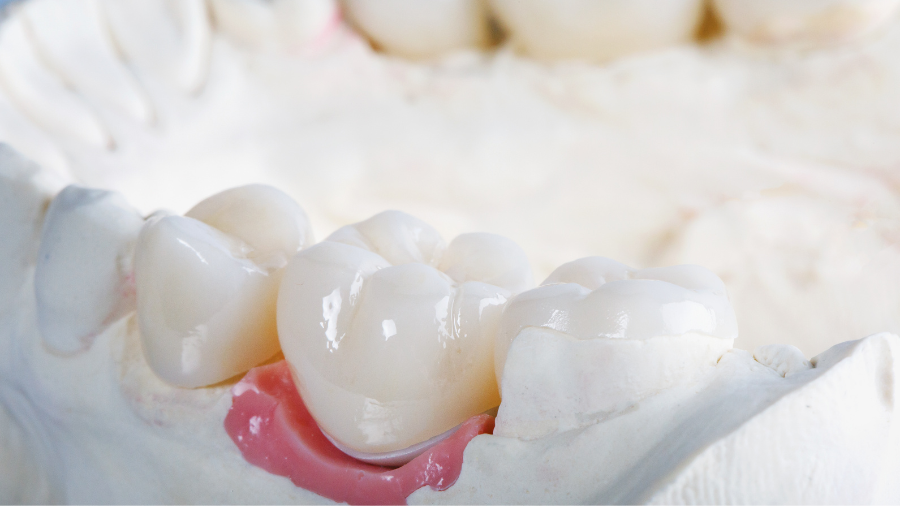
Crowns are available in porcelain, metal, or a combination of the two. With the steadily improving porcelains over the years, porcelain remains the most popular choice among today’s dentists. It is highly durable, looks natural, and can be matched closely to the color of your existing teeth. Porcelain is both functional and aesthetic.

How Are Dental Crowns Created?

Dr. Elizabeth Eggert or Dr. Jeff Eggert begins by examining your tooth and taking any necessary imagery to check its health and structure. If they determine that a crown is the best choice for your tooth, they will prepare the tooth by removing any decay and reshaping it to ready it for the crown. Then, they will take an impression or scan of your tooth either electronically or with putty.

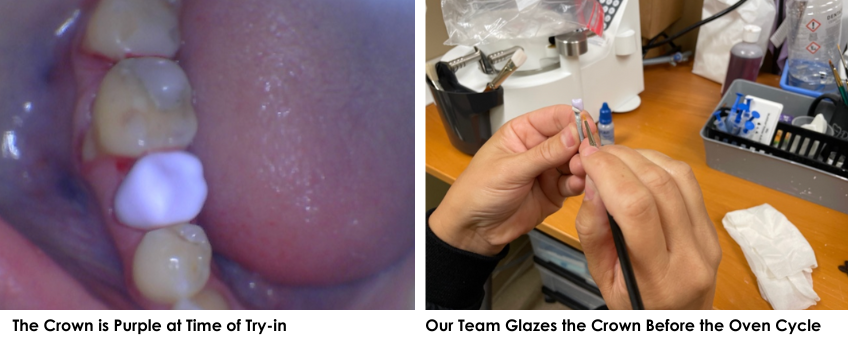
In many cases, our amazing dentists can create your crown the same day with our CEREC method. If they need to order your crown from an outside dental lab, they will fit you with a temporary acrylic crown, and you will schedule an appointment for your permanent crown two weeks later. Any crown you receive at Eggert Family Dentistry will match the color, shape, and size of your natural tooth for a flawless appearance!

When Are Dental Crowns The Best Choice?

By nature, teeth are subjected to significant wear and tear. Over time, they can develop cracks, fractures and even start to decay. In these instances, Dr. Elizabeth Eggert and Dr. Jeff Eggert generally recommend dental crowns to strengthen these weak teeth and extend the life of the natural teeth as long as possible. Restoring the integrity of a tooth or teeth is a crown’s primary function.

A Crown’s Many Jobs

Indeed, crowns are champs when it comes to protecting compromised teeth. But crowns have other important jobs as well!

  • Crowns can be placed on the teeth adjacent to a missing tooth to anchor a dental bridge securely.
  • Crowns can cover discolored teeth, creating a brighter smile.
    Read Mary’s story!
  • Crowns should always be placed over a tooth after a root canal treatment to keep the tooth from cracking.
  • Crowns are placed on top of dental implants to restore function and appearance.

Extend Crown Life With Proper Maintenance

Crowns are durable, but they’re not indestructible. With proper care, crowns should last 5-15 years. In some cases, crowns must be prematurely replaced on account of poor dental hygiene or fractures to the crown itself. In most cases, however, Dr. Elizabeth Eggert and Dr. Jeff Eggert replace crowns because acidic and sugary foods or dry mouth cause the underlying tooth to decay.

A crown is a lasting investment in your dental health. Use these tips to help extend its lifespan:

1. Maintain a consistent daily dental care routine.

When you brush and floss regularly, you remove harmful bacteria and sticky plaque from the surface of your teeth and between your crown and your gum line, decreasing the likelihood of tooth decay.

2. Wear a custom night guard if you grind your teeth.

Limit excessive bite force with a custom night guard. This is especially important if you’ve been diagnosed with bruxism. Learn more about the custom night guards we create for our Eggert Family Dentistry patients!

3. Limit your intake of sugary or acidic foods.

You might not think that sugary and acidic foods can affect a crown, but these substances can hang out around the gum line and cause the underlying natural tooth to deteriorate. They can also eat enamel on surrounding teeth, creating a visible contrast between the color of your natural teeth and your crown.

4. Steer clear of sticky or hard, crunchy foods.

Biting on hard candies, popcorn kernels, and other crunchy foods can weaken crowns or cause them to crack, just like your natural teeth can. Sticky foods like taffy and gooey candies can actually dislodge crowns while increasing your risk of tooth decay. Foods in these categories are best avoided.

If it’s been awhile since your last recare visit, schedule an appointment at Eggert Family Dentistry in North Oaks, MN. In addition to a thorough cleaning and careful inspection of your jaws, teeth, and gums, Dr. Elizabeth Eggert and Dr. Jeff Eggert will closely inspect any existing dental work to make sure it’s structurally sound and doing its job and recommend dental crowns and other interventions when needed. Call us at 651.482.8412!

Replacing My Old “Cap” – Marcia’s Story

By: Dr. Elizabeth Eggert

How did this start?       

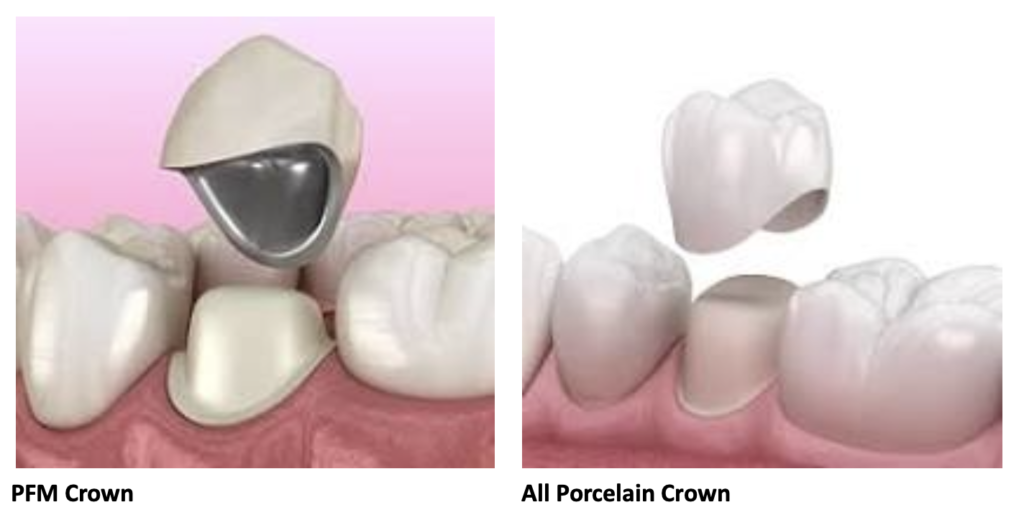
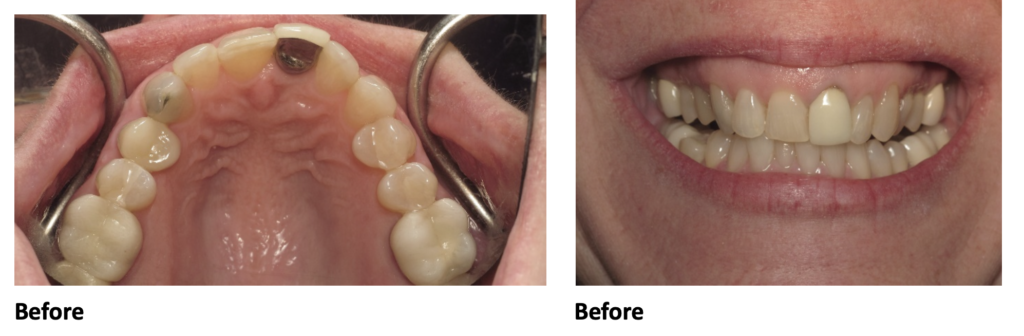
Marcia is a loyal long-time patient of Dr. Elizabeth Eggert’s since she started Eggert Family Dentistry in 2005.  Marcia has had multiple crowns placed by Dr. Elizabeth over the years.  For many years, Marcia talked with Dr. Elizabeth about the discoloration she noticed on her front tooth.  Marcia had a history of a root canal and porcelain-fused-to-metal (PFM) crown on her upper left front tooth and the metal caused a discoloration at her gumline after it had been in place a few years.
For many years, PFM crowns were commonly used in dentistry for the repair of damaged teeth.  PFM crowns have good mechanical properties, are strong and stand up well to oral forces, they look decent, and the gingival tissues tolerate them fairly well.  However, Marcia’s front crown looked dark to her from the metal substructure of the crown and it bothered her for many years.  She told us “I have a nice smile, but that cap is always what I see first.”
What did Marcia want?

Marcia wanted her smile to be more consistent.  She didn’t want her front tooth to stick out.  She noticed the discoloration and also felt anxious because she felt that her mouth was small and she had trouble when it came to having dental treatment done.  She was very concerned that any changes she might make would not look as good as what she currently had in her mouth.

What was involved?

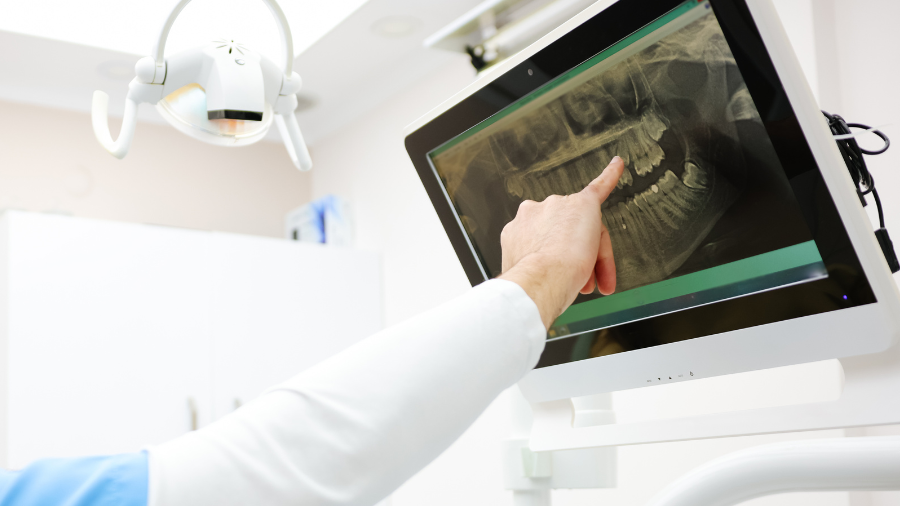
Dr. Elizabeth used photos and x-rays of Marcia’s teeth along with the results of a thorough muscle and joint evaluation to develop Marcia’s plan.  The details of the records process revealed that Marcia would benefit from Invisalign before any changes to her front tooth because of the crowding of her surrounding front teeth that contributed to the shadowing and discoloration.  Part of the reason that Marcia noticed the front crowned tooth first is that the tooth was in a prominent position.  Invisalign would eliminate the crowding, improve the tooth display in her smile and provide a smooth surface for the upper teeth to bite and chew by eliminating the crowding of the lower teeth.  Dr. Elizabeth suspected that Marcia’s bite was currently putting her teeth at higher risk and was probably at least part of the reason Marcia had needed a number of crowns and root canals over the years.
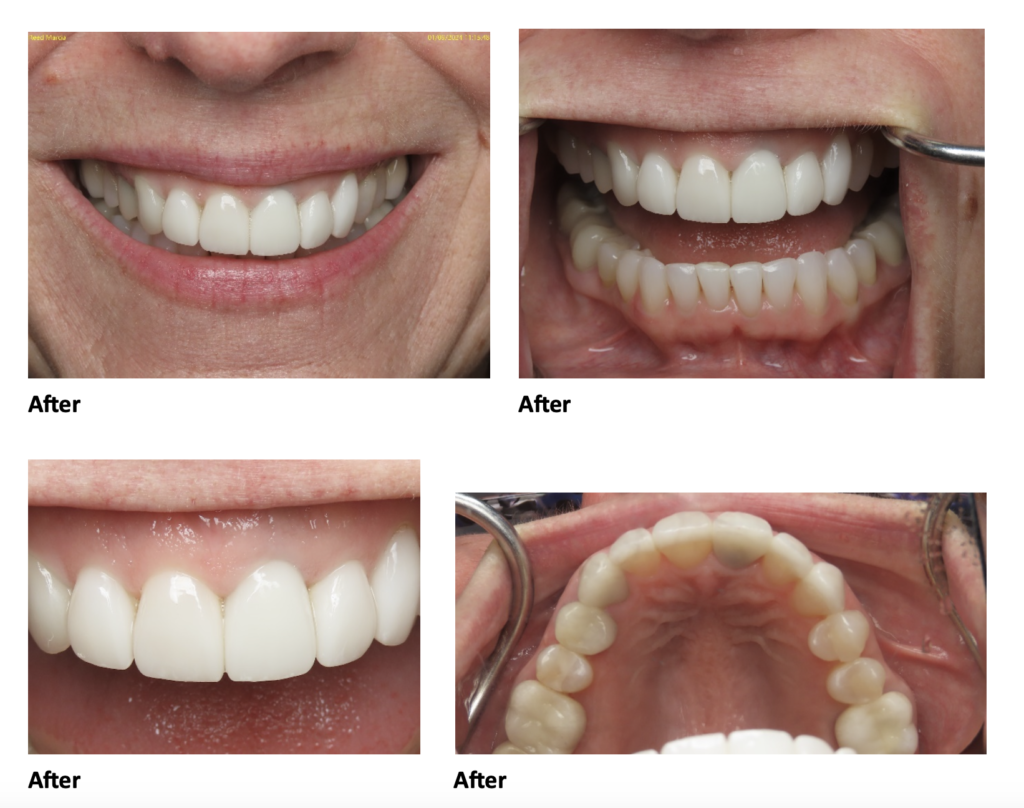
Dr. Elizabeth and Marcia decided that Invisalign would be first in order to improve her crowding and her bite and then would be best to then replace the crown on her upper front left tooth as well as veneer 4 other front teeth that also had anterior wear and chipping.  Marcia also underwent the Zoom bleaching procedure to help brighten her teeth that were not getting new restorations.

What does Marcia think?

Marcia said that she was nervous when it came to the restorations and was afraid what would be revealed under the existing PFM crown on her upper left front tooth, but it had to be done if she wanted to change her smile.  “Even though it took a fair amount of time, you guys were awesome!  I would do it again because I like the result.”  She was very happy that she did it and wished she would have done it 20 years ago!  Marcia would tell someone that was considering getting this done that it is really worth it.  “Don’t wait, just do it.”

Congratulations on your amazing results Marcia and thank you for putting your trust in us!  We were delighted to help you through this journey and look forward to working with you and your family for many years to come!
Crown Longevity: How to Make Your Dental Crown Investment Last

By: Dr. Elizabeth Eggert

Teeth take a lot of wear and tear and over time, can become fractured, cracked, and decayed. Early intervention is the best way to save your tooth and prevent more serious issues. Dr. Elizabeth Eggert and Dr. Jeff Eggert often recommend dental crowns for patients with these tooth issues. As we all know, any good investment is worth protecting, and crowns are no exception. It’s important to be proactive to ensure crown longevity.

What is a dental crown, and how does it work?

Before we get into details about how to care for your dental crown, let’s start by discussing what a crown is, how it’s created, and how it protects your tooth.

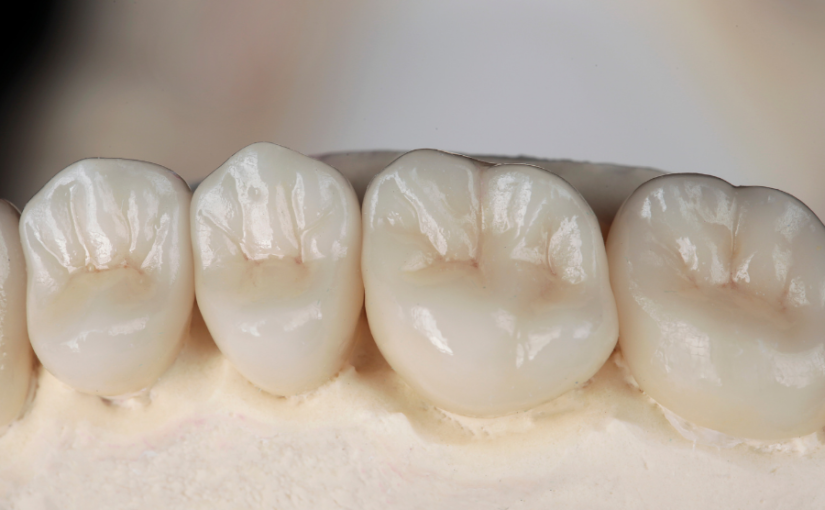
Although they can be fashioned from ceramic, metal, or a combination of the two, porcelain is the most popular and arguably the most effective material dentists use for crowns today. Porcelain is durable, feels the most natural, and is easily matched to the shade of your other teeth. Dr. Elizabeth Eggert and Dr. Jeff Eggert agree that all-porcelain crowns are the best overall choice nearly all of the time.

After Dr. Elizabeth Eggert or Dr. Jeff Eggert removes any tooth decay and reshapes your tooth, they will take a digital image or putty impression. In most cases, your crown can be created the same day at our office using the CEREC scan. Occasionally, we will need to send your impression to a dental lab, for the fabrication of your crown and you will return to our office in a couple of weeks for the placement. In this case, you’ll leave your first visit with a temporary crown and instructions for proper care.

Think about your dental crown as a protective helmet for your tooth. It fits intimately on top of your compromised tooth and is securely cemented in place. It looks and acts just like a natural tooth.

In addition to supporting weak or decaying teeth, crowns:

  • Help hold dental bridges in place
  • Cover severely stained or discolored teeth
  • Protect a tooth after root canal treatment is completed to keep the tooth from splitting
  • Are part of the system to restore a dental implant when you’re missing a tooth

With proper care, your crown should last a decade or more!

How can I take care of my dental crown to ensure crown longevity?

We’ve already established that crowns are highly durable and, among other things, help strengthen weak teeth. But although they’re durable, they’re not indestructible. Here are some important steps you can take to get the most life out of your dental crown:

1. Keep up with daily dental care.

The importance of daily brushing and flossing cannot be underestimated. Plaque can still form on crowns! Brushing and flossing twice daily helps remove sticky plaque before it builds up and keeps your teeth looking their best. It also removes food particles that get trapped between the crown and the gumline, causing plaque build-up that leads to gingivitis or decay and can aid in crown longevity.

2. Avoid chewy, sticky, hard foods.

Do you like to crunch on ice or chew hard candies? Just like natural teeth, crowns can crack under extreme pressure. Even healthy foods like popcorn with kernels and pistachios in the shell can cause undue damage to your dental crown. Taffies, caramel apples, and other sticky foods can loosen your crown, making it easy for food particles to get underneath and cause decay. In some instances, chewy foods can dislodge crowns completely. If this happens, call our office right away!

3. Minimize acidic and sugary foods.

Acidic and sugary foods will erode enamel, but even if your tooth is protected with the porcelain of a dental crown, these substances can still easily cause decay and damage the tooth under your crown.

If you choose to indulge in these foods, make sure you are using impeccable dental hygiene at home and it is super important that you maintain a regular recare schedule with us at Eggert Family Dentistry so we can discover any compromise early and before major damage occurs..

On a side note, acidic and sugary foods will cause enamel to wear thin, resulting in tooth discoloration and darkening. Because your dental crown is color-matched to your natural teeth at the time of application, discoloration of your natural teeth will create a contrast between those and your crown and detract from its natural appearance.

4. Wear a night guard if you’re prone to teeth-grinding.

Teeth grinding, also known as bruxism, is detrimental to your teeth in several ways. In addition to headaches and a sore, tired jaw, bruxism can wear down enamel and even cause teeth to crack or chip. Although molars can withstand 200 lbs of pressure from regular biting and chewing, they have their limit and so do dental crowns. Fortunately, wearing a night guard can protect your natural teeth and promote crown longevity. If you think you may need a night guard, talk with Dr. Jeff Eggert or Dr. Elizabeth Eggert about that at your next recare visit.

5. Prioritize your recare visits at Eggert Family Dentistry.

Your oral health is our first priority. In addition to a tooth cleaning by our magnificent hygienists,  Dr. Elizabeth Eggert and Dr. Jeff Eggert will closely examine your teeth for any early signs of cavities, gum disease, and oral cancer. They will also perform annual x-rays, which can help spot early signs of infection and they will treat your teeth with fluoride to help remineralize them and prevent cavities. And, a recare visit wouldn’t be complete without a thorough inspection of any existing dental work, including dental crowns, to make sure they’re intact and functioning properly.

When it comes to oral health, prevention is always the best approach. If you haven’t been keeping up with your recare visits or have any dental concerns, Dr. Elizabeth Eggert and Dr. Jeff Eggert are happy to see you in our office. Call Eggert Family Dentistry at 651.482.8412 to schedule your next appointment.

How Long Can You Expect Your Dental Crown to Last?

By: Dr. Elizabeth Eggert

Dental crowns are a popular solution for restoring damaged or weakened teeth, providing both strength and aesthetic appeal. One common question patients ask us nearly every day is: How long will my dental crown last? While the longevity of a crown can vary depending on various factors, including materials used and oral hygiene practices, it’s generally expected that a well-maintained crown can last for many years, sometimes even decades.

Dr. Elizabeth Eggert and Dr. Jeff Eggert of Eggert Family Dentistry in North Oaks, MN, understand the importance of creating durable and long-lasting dental crowns. Their commitment to quality craftsmanship and attention to detail ensures that patients receive crowns that are built to withstand the test of time. By using the latest technology and highest quality materials, emax or zirconia porcelain crowns, they can create crowns that blend seamlessly with your natural teeth and provide exceptional durability.

What Are Some Reasons Crowns Need to be Replaced?

It’s essential to note that the lifespan of a dental crown also depends on the patient’s oral hygiene habits and lifestyle choices. Even the most well-crafted crown can fail prematurely if not properly cared for. That’s why Dr. Elizabeth Eggert and Dr. Jeff Eggert emphasize the importance of good oral hygiene and regular dental check-ups. By brushing and flossing daily and visiting our office for routine cleanings and exams, patients can significantly extend the lifespan of their dental crowns.

Additionally, patients should be mindful of habits that could potentially damage their crowns, such as chewing on hard objects or using their teeth as tools. These actions can put undue stress on the crown and increase the risk of cracks or fractures. By avoiding these habits and practicing good oral care, patients can maximize the longevity of their dental crowns and minimize the need for costly repairs or replacements.

Dr. Jeff and Dr. Elizabeth most often see crowns needing to be replaced due to decay. Unfortunately, even though a crown protects a tooth, there is still a lot of tooth structure present that can decay if subjected to the sugars and acids that attack teeth and cause cavities. Dry mouth, or lack of saliva, also is a huge culprit for decay so patients that have dry mouth should be sure to talk to us about methods that can help. Occasionally, crowns will fracture just like teeth do. Typically this occurs more often in patients with unstable bite forces or who tend to put a lot of pressure on their teeth.

What Happens to Replace a Crown?

In cases where a crown does need to be replaced, Dr. Elizabeth Eggert and Dr. Jeff Eggert offer comprehensive solutions tailored to each patient’s needs. Whether it’s due to normal wear and tear or unexpected damage, they utilize their expertise and advanced techniques, like our CEREC same-day crown fabrication techniques, to ensure a seamless and comfortable restoration process. Replacing a crown is similar to undergoing the crown procedure the first time. We will get the area numbed up for comfort and carefully remove the old crown, remove any decay, and prepare the tooth for the new crown. With our dedication to patient satisfaction and long-term oral health, Eggert Family Dentistry is committed to helping patients enjoy the benefits of their dental crowns for years to come.

Have More Questions About Crowns?  Call Us Today!

While the exact lifespan of a dental crown can vary, patients can expect their crowns to last for many years with proper care and maintenance. By choosing a reputable dental practice like Eggert Family Dentistry and following our guidance on oral hygiene and lifestyle habits, patients can enjoy the functional and aesthetic benefits of their crowns for as long as possible. Remember, a healthy smile starts with good habits and regular dental care. Call us today at 651-482-8412 to set up your next appointment.

Exploring the Fascinating History of Dental Crowns

By: Dr. Elizabeth Eggert

Have you ever wondered about the origins of dental crowns? It’s a fascinating journey through time, starting centuries ago when people first sought solutions for damaged or missing teeth. We here at Eggert Family Dentistry in North Oaks, MN, thought it might be fun to delve into the rich history of dental crowns and share it with you.

Early History

The concept of dental crowns dates back to ancient times, with evidence suggesting that civilizations like the Etruscans and Egyptians used various materials to restore teeth as early as 200 AD. However, it was not until the 19th century that the modern dental crown as we know it began to take shape. Sir Isaac Newton suggested using gold as a material for dental restorations in the 17th century, laying the groundwork for future innovations in dental crown technology.

Over the years, dental crown materials have evolved significantly. From gold and amalgam to porcelain and ceramic, dentists have experimented with a wide range of materials to achieve the perfect balance of durability, esthetics, and biocompatibility. Today, all-ceramic crowns are among the most popular choices due to their natural appearance and strength, however, porcelain fused to metal (PFM) crowns are still a popular choice after their introduction in the 1970’s.

What Makes These Materials Great for Replacing Teeth?

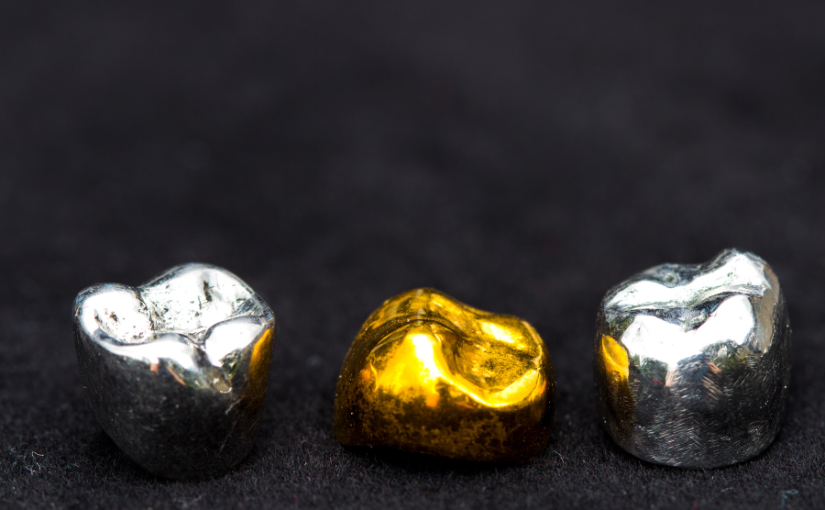
Porcelain and ceramic crowns closely mimic the appearance of natural teeth, blending seamlessly with your smile. Additionally, they are highly durable and resistant to stains, making them ideal for long-term use. Porcelain is a very good substitute for the enamel found on natural teeth both for esthetic properties and strength. Porcelain fused to metal crowns combine the strength of metal with the esthetics of porcelain, offering a versatile solution for various dental needs. Gold crowns are just that, crowns made completely out of gold metal.  While they don’t look as natural as a porcelain crown due to their gold color, gold crowns have stood the test of time with their high durability and biocompatibility. The main issue with gold or PFM crowns now is the metal has gotten so expensive that these materials can no longer keep up with all the benefits of all porcelain crowns.

How Are Crowns Fabricated?

When it comes to fabricating dental crowns, there are two main methods:  in-office fabrication or dental lab fabrication. To make a crown in-office, we using technologies like CEREC (a CAD/CAM technology), that allows for same-day crowns, providing convenience and efficiency for patients. Crowns made in a dental lab are typically made from impressions or scans taken by Dr. Elizabeth or Dr. Jeff and then the lab is able to make the crown with their highly specialized equipment.

Whether fabricated in a dental lab or in the office, dental crowns play a crucial role in restoring and enhancing smiles. From their humble beginnings in ancient civilizations to the advanced materials and techniques used today, dental crowns continue to evolve, offering patients durable and esthetically pleasing solutions for dental restorations. So the next time you flash your smile, remember the rich history behind those beautiful crowns! Call Dr. Jeff Eggert or Dr. Elizabeth Eggert at Eggert Family Dentistry today for your next dental crown.  651.482.8412.

A Quick New Smile for a Lifetime! – Jim’s Story

By: Dr. Elizabeth Eggert

How did this start and what did Jim want?

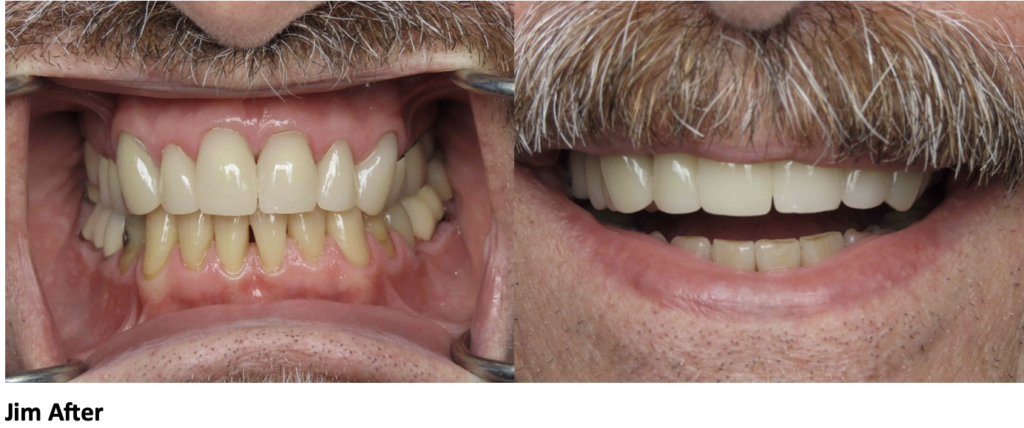
Jim has been a loyal patient of Dr. Elizabeth Eggert for over 15 years.  She has placed multiple posterior crowns for Jim over the years, but there came a time when Jim’s front teeth, which had previously been treated with PFM (porcelain fused to metal) crowns, were decaying and needed to be replaced.  Jim was interested in getting his crowns all done in one day and he wanted them to look natural.  We were able to address his front four teeth in one 3-hour appointment and his two upper canine (eye-teeth) at a subsequent 2-hour appointment.

What was involved?

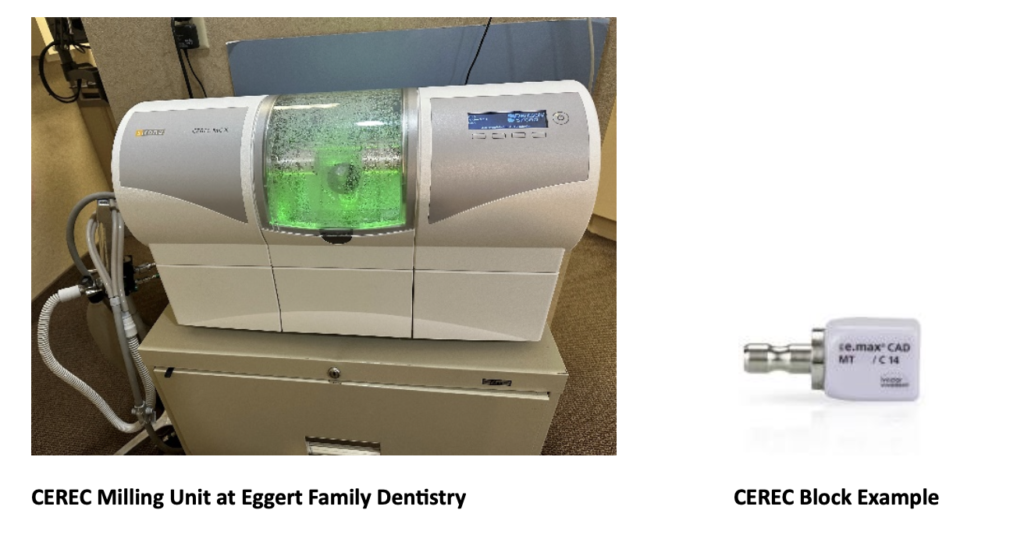
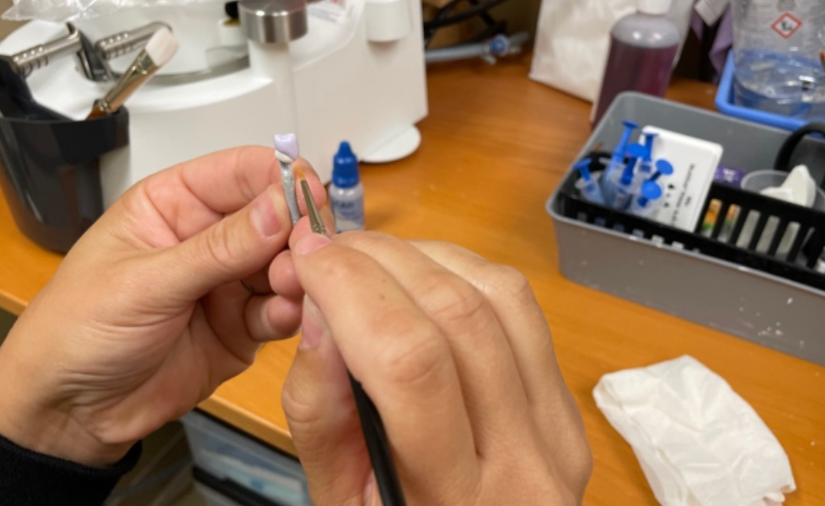
We were able to complete CEREC crowns for Jim’s front teeth.  This means we were able to make the crowns right in our office!

How CEREC Works

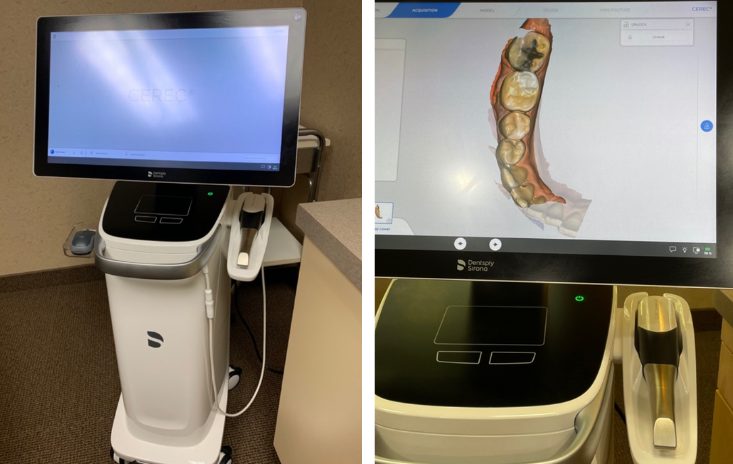
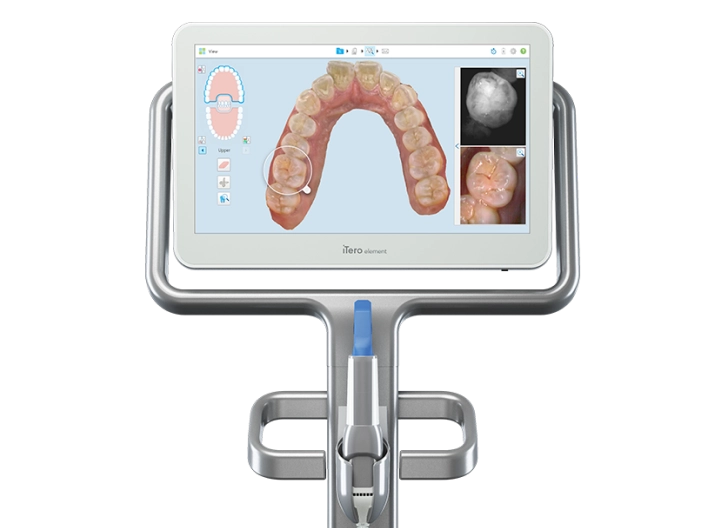
CEREC (Chairside Economical Restoration of Esthetic Ceramic) is a method of creating dental restorations right at Eggert Family Dentistry in one appointment!  These restorations are typically used to repair damaged teeth due to decay or injury.

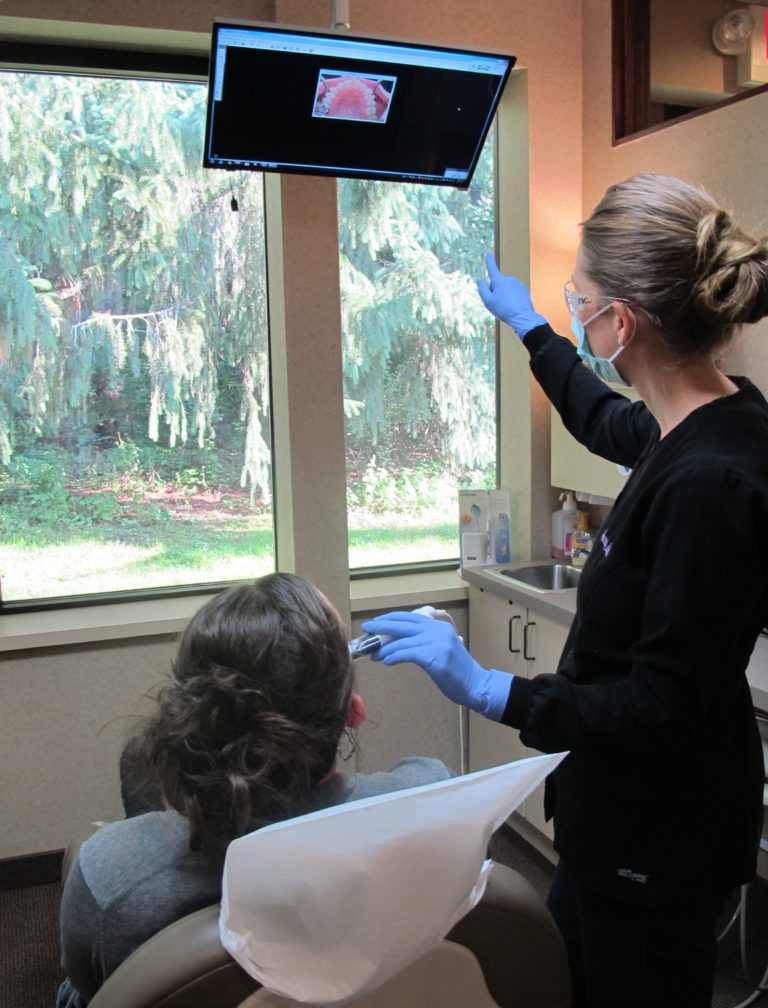
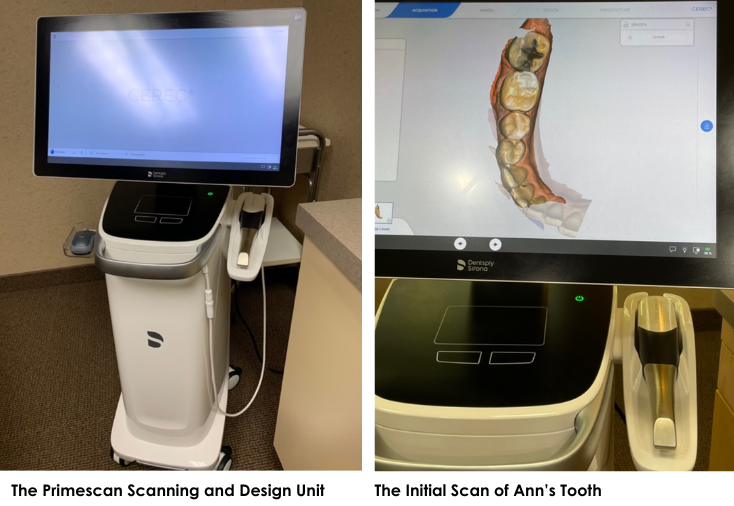
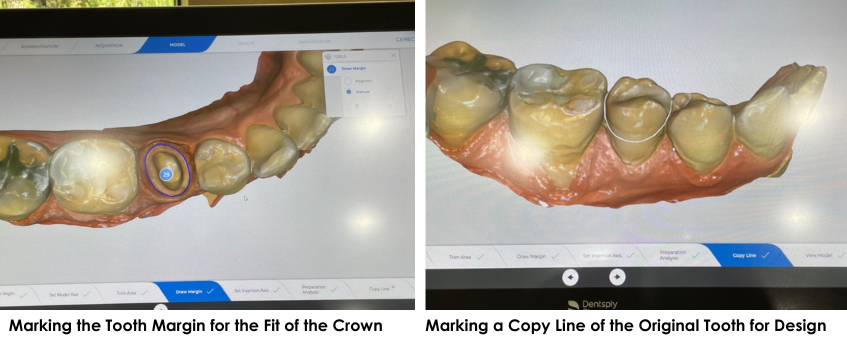
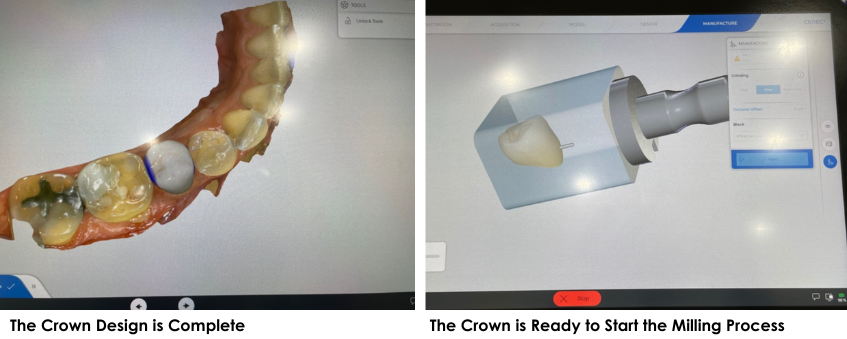
Specifically, restorations are designed and created using CAD/CAM (computer-aided design and computer-aided manufacturing).  This process means designs are made after scanning with a highly advanced scanning unit and then computer software helps Dr. Jeff and Dr. Elizabeth design your crown!  The design is sent to the milling unit and your crown is ready in minutes.

C – Chair-Side:  The CAD/CAM technology is in the office and can be used while you are the dental chair.
E – Economical:  The procedure allows our office to keep our costs as low as possible for patients.
R –Restorations:  The CEREC procedure restores your tooth to its natural beauty, function, and strength.
E – Esthetic:  CEREC restorations are metal-free and tooth-colored.
C – Ceramic:  The ceramics we are able to use in-office are similar in strength to enamel, your natural tooth structure.   

What does Jim think?

Jim loves his new smile and was so happy to be able to get all his crowns done without multiple visits and without the risks that comes with wearing temporary crowns (like them accidentally coming loose).  Jim’s story is just one of many others who have experienced magnificent results with Dr. Eggert.  Crowns can yield beautiful and predictable results for accomplishing an improved smile.  At Eggert Family Dentistry, we love providing Dentistry for a Lifetime of Smiles – thanks Jim for trusting us to help you continue to smile big and confidently!

Jim After

Jim After


Are There Any Restrictions After I Get a Crown?

By: Dr. Elizabeth Eggert

In the immediate hours after getting a dental crown, you may wonder, “What did Dr. Eggert say again?  Are there supposed to be any restrictions for me today?”  Well, wonder no more.  Here we will share several post-operative care measures that can contribute to a smoother recovery and enhance the longevity of your crown as well as improve your healing.

You maybe didn’t know, but our website has helpful post-operative instructions for most of the dental procedures done in our office including Crowns.

After the Preparation Appointment

After the preparation appointment, if you did not have a CEREC crown done, you are wearing a temporary crown or bridge.  This is held on with temporary cement.  Be sure to avoid sticky foods and gum so as to not pull the temporary off.  Also avoid hard or crunchy foods.  It is best to chew on the opposite side as much as possible.

Expect your gum tissues to be sore for a few days.  It helps to rinse with warm salt water (8 oz warm water and 1 teaspoon salt) 2-3 times daily for 3-5 days.  It also helps to take some over-the-counter pain medication like ibuprofen or Tylenol for both gum soreness, tooth soreness, and jaw soreness.  Take that as directed in our office, for most patients that are able to take ibuprofen, we will recommend 600 mg of ibuprofen every 6 hours for the first 1-5 days.

It is important to brush and floss the temporary.  This will help the gum tissues heal faster.  Brush with small, circular, massaging strokes along the gumline.  While flossing, pull the floss out to the side if you experience a lot of resistance through the contact point of the tooth.  Occasionally temporary crowns will be splinted together, or in the case of a temporary bridge, use the floss threader as directed in our office.

Temporary crowns rarely come loose, but if yours happens to do so:

  • Don’t panic and try to save the temporary (i.e. don’t swallow it)
  • Attempt to re-fit the temporary on your tooth using toothpaste to hold it in place
  • Call our office right away to find a time for us to recement your temporary for you

What Are Some Symptoms I Should be Concerned About?

Occasionally teeth undergoing the preparation procedure will experience inflammation in the nerve.  This can happen with any tooth, but more commonly occurs in a tooth that has had a large filling or deep decay, cracking, fracture, or pain before the preparation procedure.  The inflammation in the nerve tissue can become irreversible, necessitating additional procedures for the tooth.  If you have any of the following signs or symptoms, call our office right away:

  • Prolonged pain after cold, hot, or chewing that gets worse over time
  • A dull ache that won’t go away
  • The need to take over-the-counter pain medicine for 5 days or more “around the clock”
  • Pain that wakes you up at night
  • Pain that gets worse over time instead of better
  • Swelling getting worse in the gums or tissues surrounding the tooth

After the Cementation Appointment

After the cementation appointment, the gum tissues and tooth may be sensitive and sore for a couple of days.  Use warm salt water rinses and over-the-counter pain medicine during this time if needed.  Brush and floss the new crown or bridge as you would any tooth.  If you experience any of the signs or symptoms listed above describing inflammation in the nerve, please call our office right away.  If you had a CEREC crown done, your preparation and cementation occurred all in one day.  The same instructions apply although there is no need to avoid sticky or crunchy foods.

Generally, you may want to avoid eating or drinking for a couple of hours after the procedure so you don’t accidentally bite your cheeks, lips, or tongue due to the local anesthetic used for your procedure.  It is also helpful to stick with easy to chew foods to minimize the stress for your tooth.

Once you have your final crown, practicing good oral hygiene remains essential.  It still is possible to get decay and gum disease even if your tooth has a crown.

After the placement of a dental crown, certain restrictions and considerations should be observed to ensure the optimal success and longevity of the restoration. While dental crowns are designed to restore the function and esthetics of a damaged tooth, it’s important to be mindful of so your crown can last for many years!

Eggert Family Dentistry, Your Dental Crown Experts

We’re here for you if you still have questions about what to do after your dental crown procedure.  Call our office today at 651-482-8412!  We look forward to working with you again soon!

Preparing for Crown Success: A Guide to Your Dental Procedure at Eggert Family Dentistry

By: Dr. Elizabeth Eggert

Are you scheduled for a dental crown procedure at Eggert Family Dentistry in North Oaks, MN? Dr. Jeff Eggert and Dr. Elizabeth Eggert are renowned for their commitment to delivering top-notch dental care and preparing adequately for your crown procedure can contribute significantly to your success and your overall comfort during recovery.

Understanding the Crown Procedure

Before delving into the preparation, it’s beneficial to have a brief understanding of the dental crown procedure.  Dental crowns, also known as caps, are custom-designed to fit over a damaged or weakened tooth, restoring its strength, functionality, and appearance.  At Eggert Family Dentistry, we often complete crowns in one visit using our CEREC procedure.

Preparing for Your Crown Procedure

  1. Consultation and Treatment Planning:  Before the actual procedure, Dr. Jeff or Dr. Elizabeth will have completed an exam to diagnose the condition of your tooth and will have talked with you about the reasons why a crown is recommended for you.
  2. Ask Questions:  Feel free to ask any questions or express concerns during your exam or before scheduling for your procedure.  Any one of our magnificent team members will be able to help you understand your condition.  Understanding the procedure, potential discomfort, and aftercare instructions will help alleviate anxiety and ensure you are well-informed.
  3. Oral Hygiene Routine:  Maintain a diligent oral hygiene routine leading up to the procedure.

Day of the Procedure

  1. Eat Before Your Appointment:  Have a nutritious meal before your appointment as you will likely want to avoid eating until the local anesthetic needed for the appointment wears off.
  2. Comfortable Clothing:  Consider wearing loose, comfortable clothing to your appointment, as this can enhance your overall comfort during the procedure.
  3. Consider an Anti-inflammatory:  We will definitely recommend an anti-inflammatory if it is appropriate for you after your dental crown procedure, but if you take your first dose about one hour prior to your appointment time, the medicine has time to kick in and your muscles and tooth can be that much happier! 

What’s Next?

Preparing for a dental crown procedure at Eggert Family Dentistry involves a combination of proactive steps and open communication with your experienced dental team.  By taking these measures, you set the stage for a successful procedure and a speedy, comfortable recovery, ensuring your smile remains healthy and vibrant for years to come.  Call us at 651-482-8412 to schedule your dental crown procedure today!