By: Dr. Elizabeth Eggert
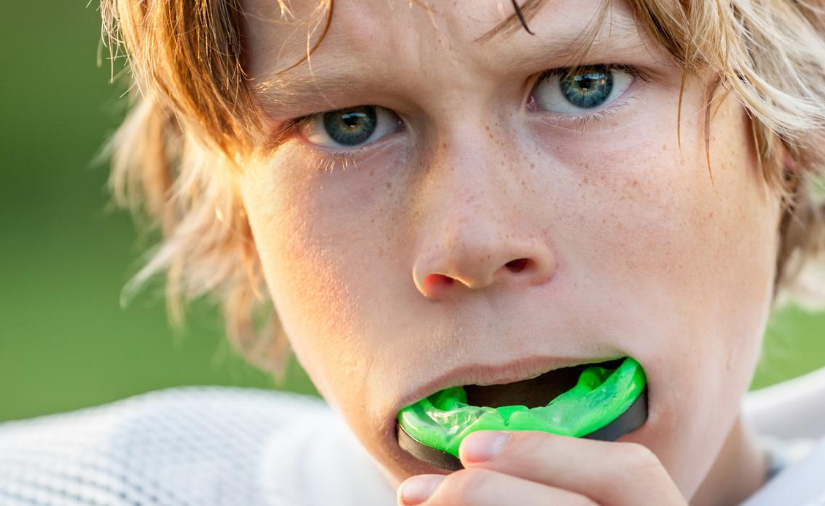
If you play sports, please consider wearing a mouthguard to protect your teeth.
According to the American Dental Association (ADA), 10-20% of all sports-related injuries are maxillofacial injuries, relating to the mouth and all the connecting regions. The ADA recognizes “the preventive value of orofacial protectors, endorsing their use by those who engage in recreational and sports activities and encouraging widespread use of orofacial protectors with proper fit, including mouthguards.”
While the risk of injury is obvious in classic contact sports like football, boxing, wrestling, lacrosse, and hockey, the ADA also advocates a mouthguard when participating in limited-contact sports like baseball, gymnastics, racquetball and surfing.
A well-fitting mouthguard will protect your dental health in a variety of ways. While it can’t guarantee that you’ll suffer zero dental damage, a mouthguard is almost certain to reduce dental injuries.
Benefits of Mouthguards
Mouthguards prevent teeth from being knocked out: Having an intact tooth knocked out is no fun. In some cases, it can be retained, but it will require substantial dental attention.
Mouthguards can prevent teeth from fracturing: It may be possible to save a broken tooth, but it will require a substantial filling, a crown, and likely a root canal. If it can’t be saved, an extraction and implant will be needed.
Mouthguards can protect soft tissues: When you suffer an unexpected impact, it’s easy to accidentally bite your tongue, cheek or lips. A mouthguard will help prevent this.
Mouthguards can protect against tooth displacement: Sometimes, an impact can loosen a tooth so that it stays in the socket, but is moveable. When you’re wearing a mouthguard, the force of the impact is distributed over several teeth, reducing the likelihood of displacement. Teeth can be displaced laterally (forwards or backwards) or can be extruded (down).
Mouthguards can prevent jaw fractures: By serving as a shock-absorber, a guard can help prevent the jaw from fracturing—a serious injury that may require surgery.
Mouthguards may help reduce concussions: Evidence is not conclusive, but it’s possible that the padding between the upper and lower jaws can absorb some of the impact that causes a concussion.
In Case of Dental Injury
Should someone suffer a dental injury during sports or any other activity, follow these guidelines:
If a tooth is fractured, stabilize the portion of the tooth retained in the mouth and control the bleeding by gently biting on a towel. Retain all tooth fragments and keep them submerged in water or milk.
If an entire tooth —root and all—is knocked out, handle the tooth by the crown, not the root. You can rinse it gently with water, but do not wash, sterilize, or scrub it. If possible, place it back in the socket (the correct way) and then bite gently on a towel. If not, transport it to the dentist.
In both cases, time is critical and you should be in the dentist’s chair within two hours.
Wear a Mouthguard for Sports
Dr. Elizabeth and Dr. Jeff love seeing you, but we hope you never have to come in for treatment after a preventable dental injury! Take care of your teeth, please. Wear a mouthguard for sports.


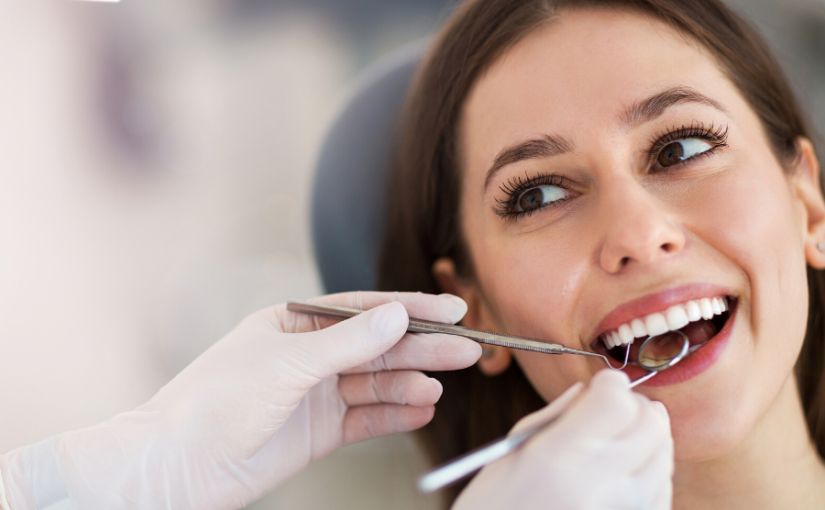

 When teeth and gums are not properly cared for, bacteria builds up, causing plaque to form and inflaming the gums. When gums become inflamed, bacteria can easily sneak under the gums and enter the bloodstream. Bacteria in the bloodstream can infect tissues throughout the body and make you sick.
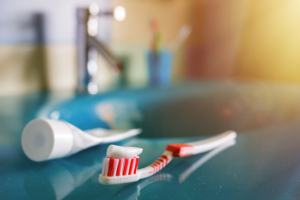 During cold and flu season, vigilance is your best defense. In addition to healthy eating, routine handwashing and getting enough sleep, it’s important to practice good toothbrush care. At Eggert Family Dentistry, we recommend tossing your toothbrush after any cold or flu to avoid the likelihood of reinfection. We also recommend washing your hands before you brush and floss, rinsing your toothbrush well and allowing it to air dry after each use and keeping family members’ toothbrushes separate from each other in order to avoid cross-contamination. And regardless of the season, don’t ever share a toothbrush!

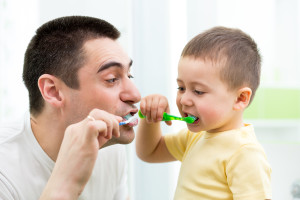 If you didn’t already have a case for taking good care of your mouth, hopefully understanding the connection your oral and physical health have with one another may help you. Here are some ways to maintain a healthy smile!